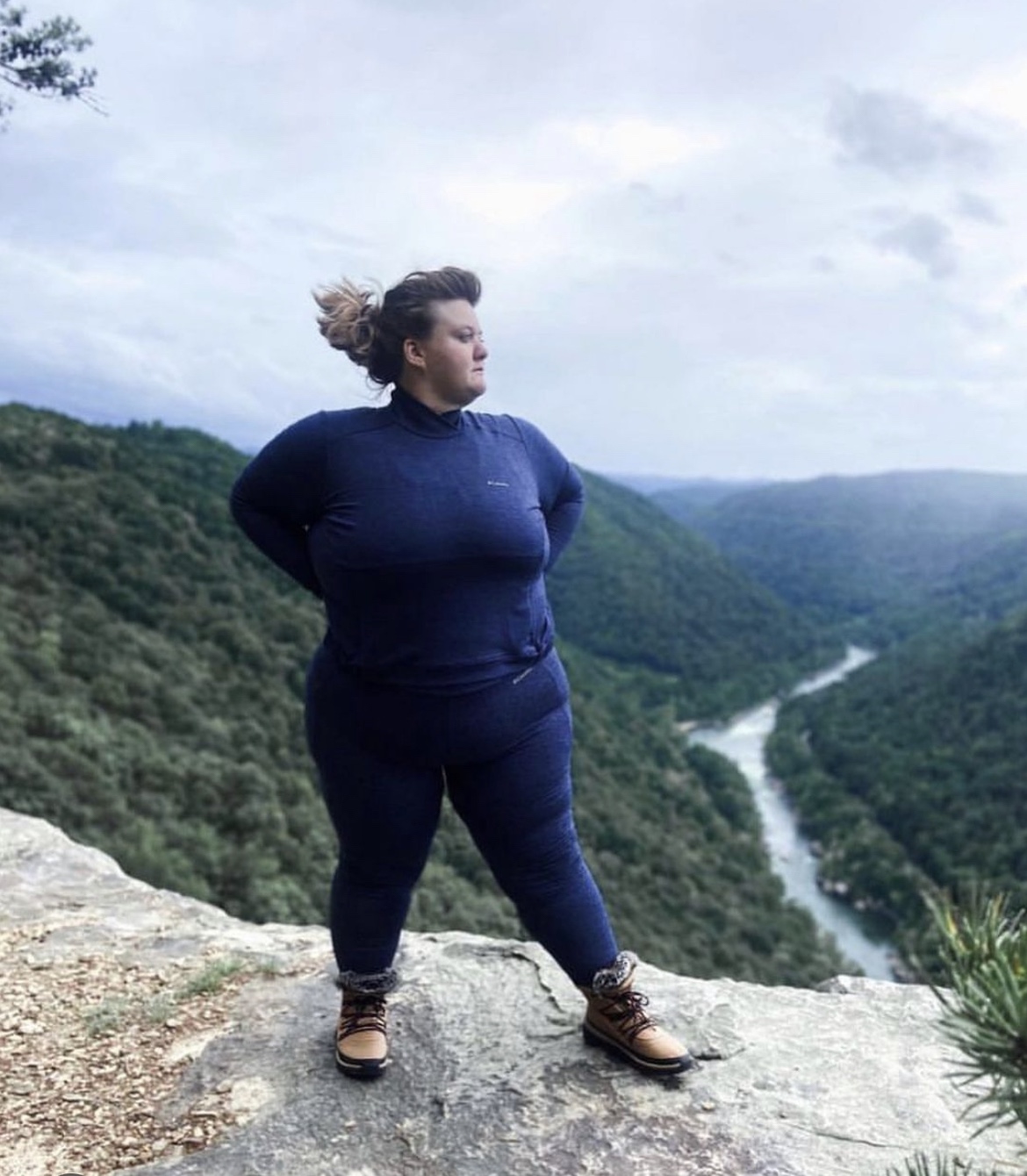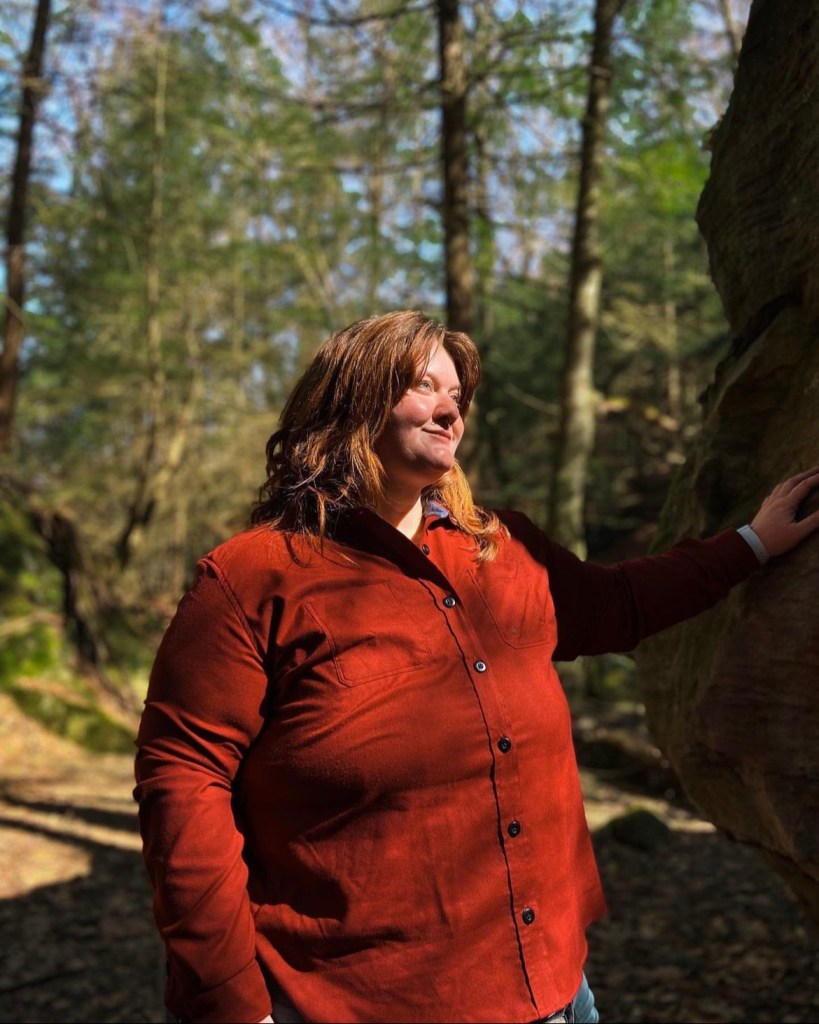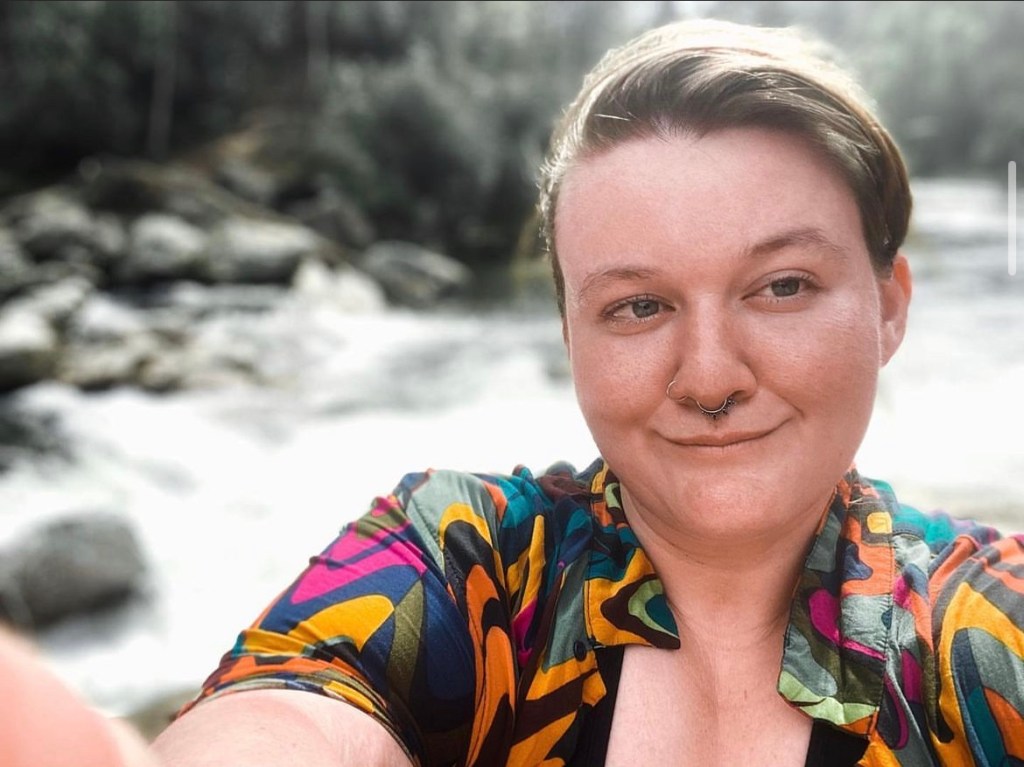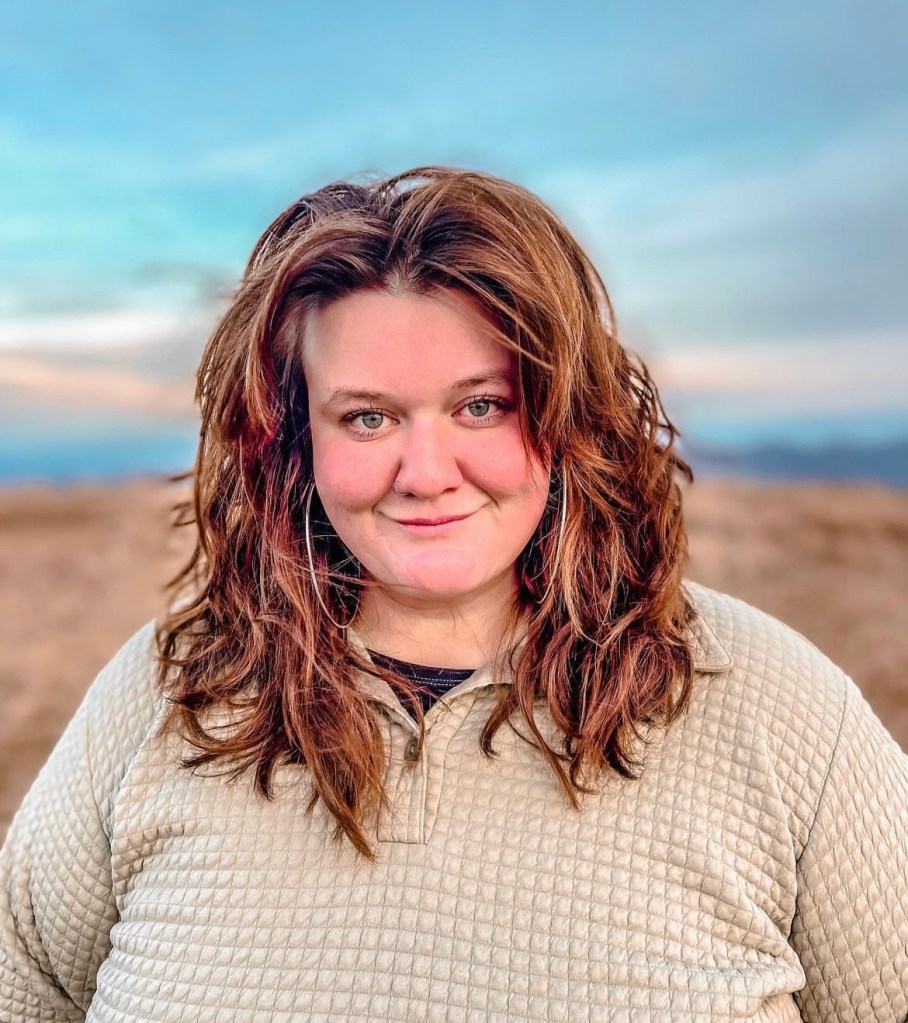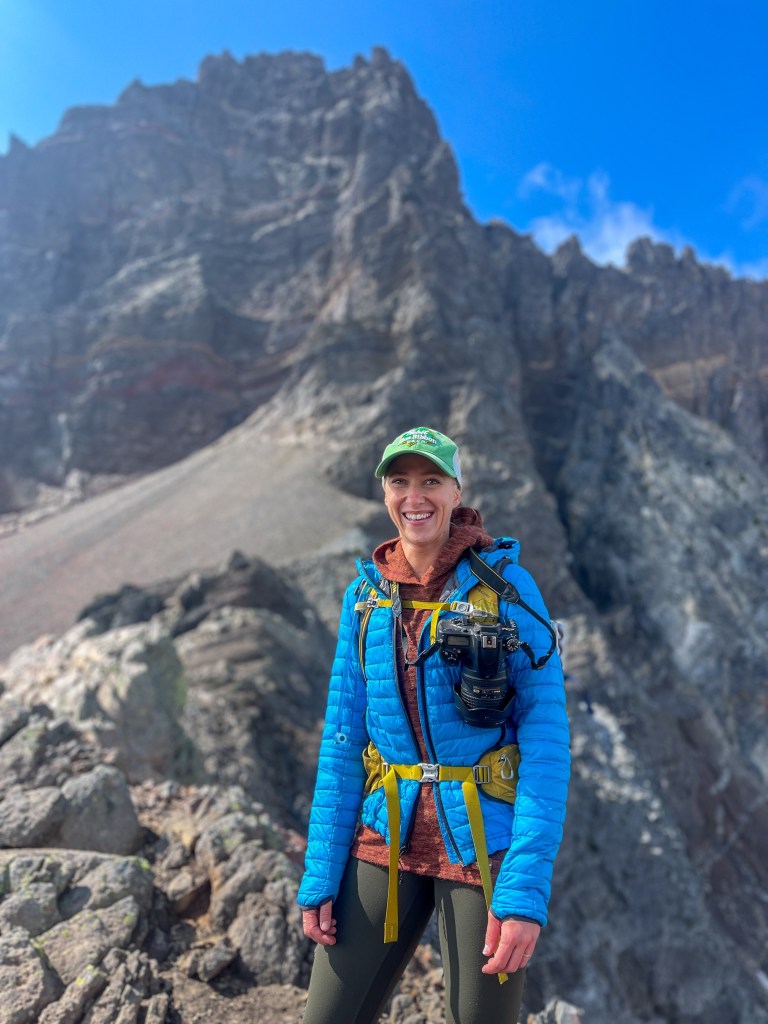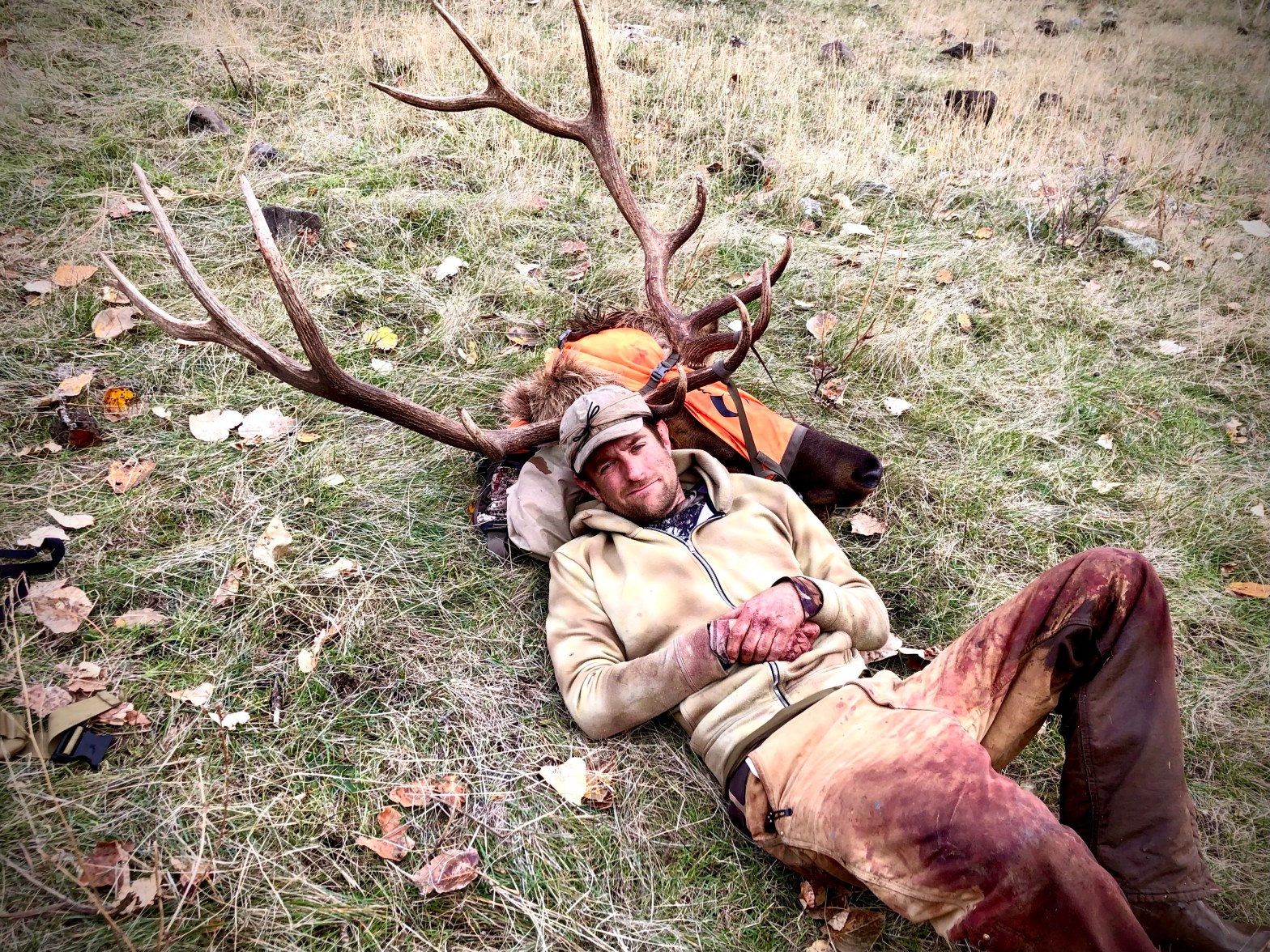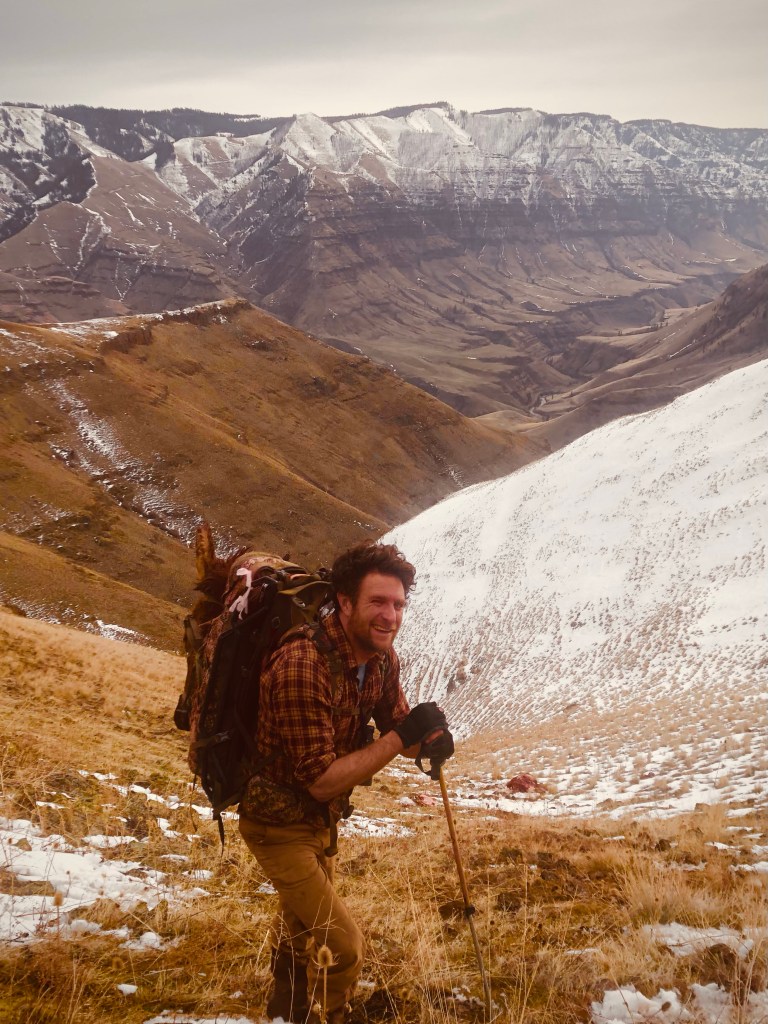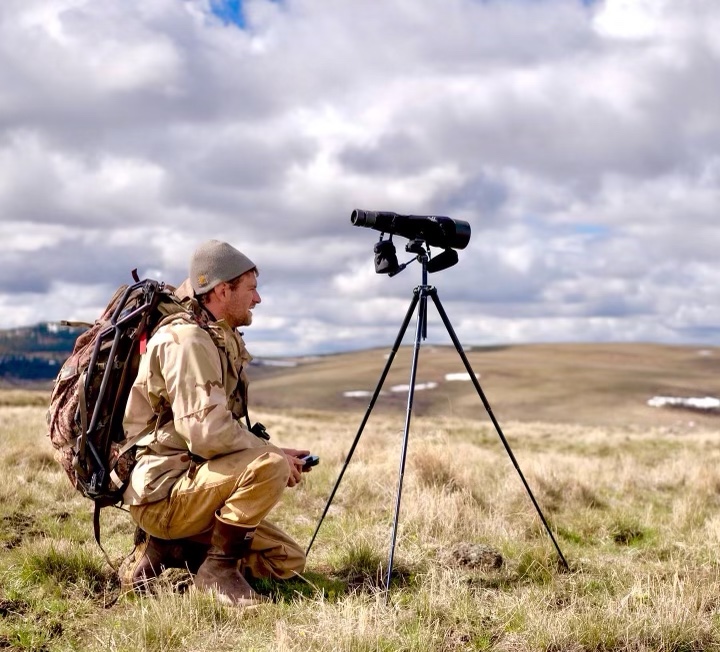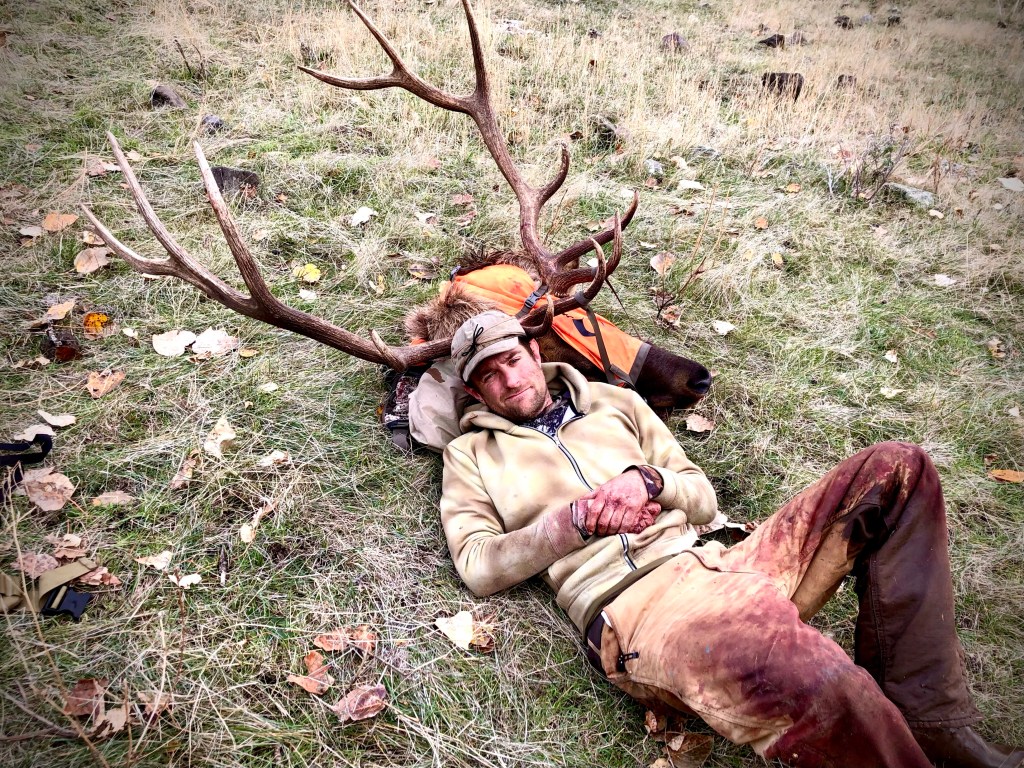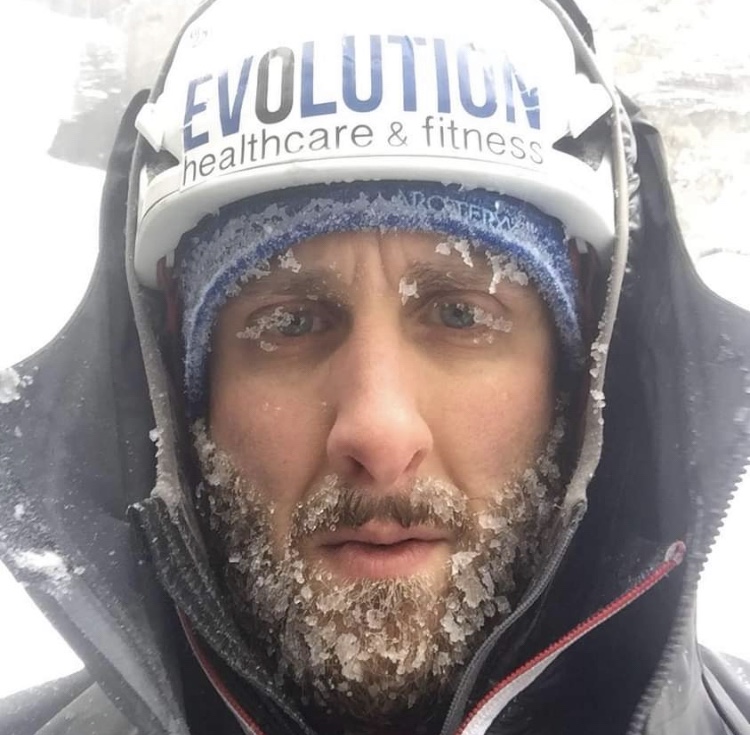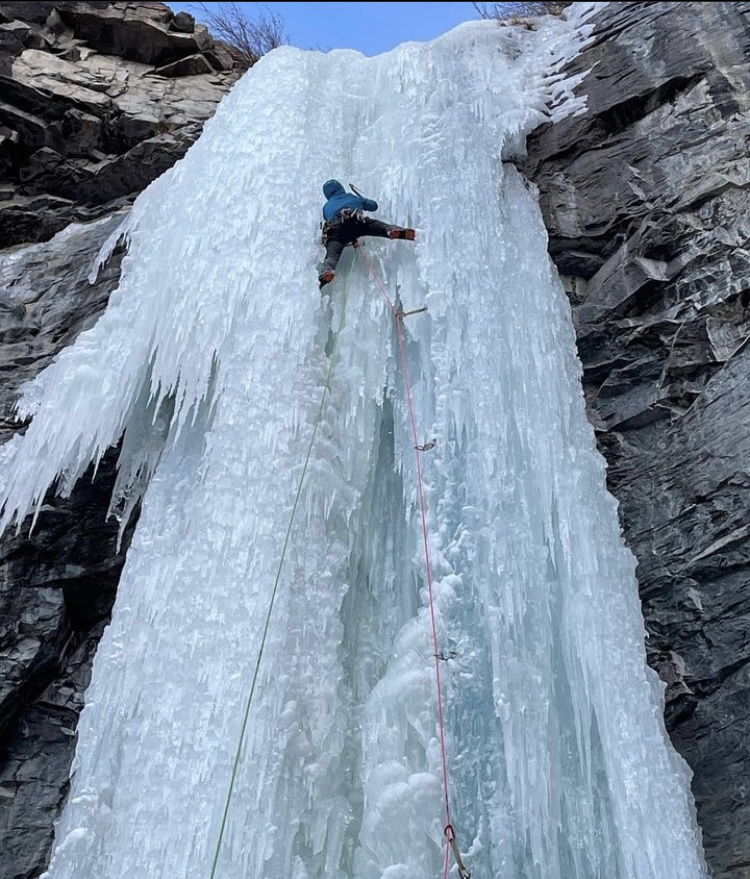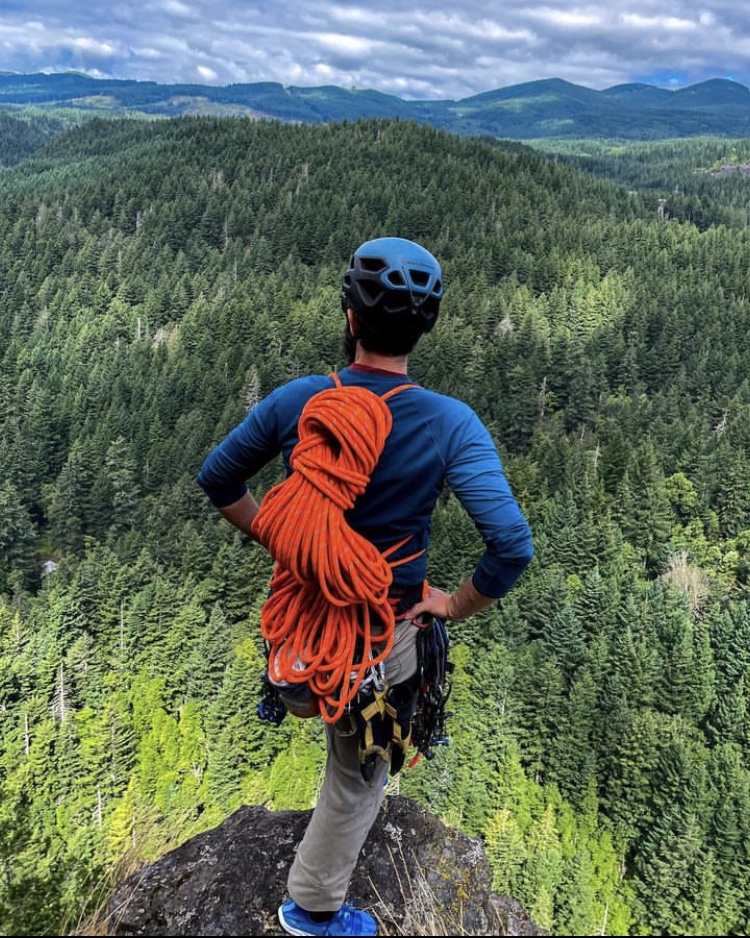
TOPOPHILIA: Surviving a Near Fatal Accident & Celebrating Irrational Optimism with Aaron Smith

NORTHER: Can you start by telling us about your relationship with nature and how it has progressed through your life? 

AARON: Maybe this is true for most people, but my relationship with nature has changed a lot throughout my life. 

I think as a kid growing up in the concrete suburbs of Dallas, Texas, I just knew that I liked playing outside, but nature was a fairly abstract concept to me. It wasn’t until really when I moved to Oregon in my twenties that I started experiencing “nature” in a more real and specific way.  

I feel most at home and most grounded when I’m out in a wild, remote place, especially by myself. It feels really important to put myself in a super remote situation alone- at least once a year, but ideally several times a year. Where I’m spending a few days alone, beyond the reach of cell service. 

I love all different kinds of landscapes. I love the desert. I love the rain forest of the Cascades. I seek out a lot of different kinds of experiences. 

NORTHER: What are some of the places that feel like home to you in the outdoors? Do you wanna talk a little bit about your background in the outdoors and give some context for your depth of experience.

AARON: I would say Mount Hood, which is like the first place where I really spent a lot of time outdoors. Parts of Joshua Tree, and more recently, Death Valley, are places where I’ve found that sense of home in California. I love the Mojave desert. 

In my late twenties, I started backpacking with some friends who kind of brought me out on longer trips. And then over time, through friends I started taking on more intense hiking and backpacking trips and bike tours. And then over time, I started making different friends who did more intense things outdoors.

I did a portion of the Sierra High Route through the southern Sierra in 2018 with a couple of friends and that was kind of a peak experience for me. It was just traveling a long distance over very uncertain terrain, following a rough line on a map that might take you through some pretty adventurous spots. That kind of opened a new world to me. I started doing more trips like that off-trail and then planning shorter ones solo.

I also started working for the National Park Service as a historic preservation carpenter in 2017, first at Mount Rainier, then on the Channel Islands in California and then at Point Reyes. 

NORTHER: Amazing. If you’re ready, can you tell us about the accident you had? 

AARON: In the fall of 2021 I had just wrapped up a Park Service gig and I wanted to do this big solo off-trail adventure in the Inyo mountains. It’s called the Lonesome Miner Trail. It follows some unmaintained trails, old jeep trails, mule paths, footpaths that connect some early 20th century, late 19th century mining camps.

Inyo Mountains is this really stunning, rugged range east of the southern Sierra. So it’s like across Owen Valley from Mount Whitney. Because it’s in the shadow of the Sierras, it doesn’t get as much attention. The Inyos form the western boundary of Death Valley National Park. 

Anyway, I was gonna do about 44 miles, something like that over three days. I had planned the trip out as much as I could based on known year-round water sources, springs, but all I had with me for navigation was basically downloaded maps on my phone. I think I printed out a map too. 

Before I lost cell service, I sent the GPS coordinates of my truck to my partner. I sent her the GPX file of my route and told her when I was due back and that if I wasn’t back by X time, um, that something was up and she should call the local sheriff. I gave her the number for the local sheriff and, and then that was it. I put my phone on airplane mode and I started hiking.

Pretty quickly, I realized that the GPX file I had found online for this route kind of shortened the distances a little bit. Um, like just enough that it made a significant difference in how much daylight I was gonna have especially at the end of that first day. 

I’ve always kind of described myself as an irrational optimist. I think it’s generally one of my better qualities, but it doesn’t always benefit me, for sure.

At the end of the first day, I filled up all my water at a little spring where there was some ancient mining equipment. I was hoping the water was good- you never really know. This isn’t industrial mining, this is like, you know, two guys and a mule situation, but you never know. Enough people have hiked this before and, like, apparently not died that I just trusted it. 

Part of the allure of this hike is just that, like, I love old abandoned mining camps. I think that stuff is super cool. I love that the desert just kind of preserves things in a way that the Pacific Northwest just doesn’t. So you can come across like some pretty sweet old artifacts that, in some cases, have been untouched for a really, really, really long time. 

This hike was an opportunity for me to encounter a bunch of that stuff, and some old mining cabins that some volunteer groups have kind of halfway maintained over the years. My route was just kind of stringing together these old cabins. 

So, this route is like, you know, thousands of feet of elevation drop and then thousands of feet of gain and then, like, you lose it again and then you gain it again. It’s not a traverse, it’s up, down, up, down, up, down and it was intense. I think I underestimated what my speed was gonna be doing this. 

So, that first night, I’m starting to climb up and out of this big drainage, this canyon, we’ll call it. I started losing daylight. This is late October, so the sun is going down, you know, like around six, something like that. I ended up hiking several hours past sunset in order to get to my next water source. Normally, if there’s any moonlight, I love hiking at night by moonlight when I can, we talked about this before. I know you like to do this too. 

So, this could have been one of those hikes, but there was no moon whatsoever that night, or at least it didn’t come up early enough to be of any use to me. I was in just total, total blackness and it’s a remote enough place that there’s no light pollution to help either really. Um, you know, this is maybe the only time I would have ever welcomed it. 

So, all I had with me was my head lamp and, um, and headlamps aren’t that good- you lose a lot of relief if the light is on top of your head, because you can’t see shadows, right? It’s all washed out. And so, if there’s no trail, which there wasn’t in this case, then it’s really hard to make out a slightly discernible footpath, which is all there was in places. So, I had my headlamp and then the GPX route on my phone that I’m following, my little blue dot in relation to a line on a map.

 I’m seeing where I think I need to veer off to start coming up and out of the bottom of this drainage. But the terrain just doesn’t look quite right. So, I kept going and then finally at some point, I’m like, “Man, I definitely passed it, I just need to start going up.” And, so, I started climbing up and out of this, this 1500’ screen slope. 

Basically, it just, it sucked, this big, tall boulder mess. And, um, the wholetime, I’m like, “man, this sucks, this is not fun.” I just wanted to get to a flat. I was so tired. I’ve been hiking all day. I was hungry, I was thirsty, I was drinking way more water than I should have been.

I can’t make camp anywhere on the slope because it’s all pretty unstable. I just have to get to the top. I’m realizing as I’m going up that I’m a little bit off from my route, like probably 100, 150 ft, something like that. But between me and where I should be is like this vertical face that’s getting taller as I’m going up. I’m like, just hoping that at the top it’ll become easy enough for me to get back to where I need to be. But, um, that’s not what happened. 

We all have physical limits somewhere, but our brain is the only thing between us and our physical limits.

So I get to the top of this slope and then I’m just faced with vertical rock all around me. I was contemplating my options- like, “ok, it’s maybe 20, 25 ft tall and it’s super featured and like, I am um, just reckless enough and just enough of a skilled climber that I think I can probably make it up. Like, ideally wouldn’t, but, I think I can probably do it and I’ll probably be fine.

Which is like, not good enough, right? That’s not good enough when you’re by yourself, and you don’t have any means of communication. Like you should be protected if you’re climbing something that sketchy and you should at a minimum, have, uh, maybe climbing shoes and like a helmet and a way to communicate. But I had none of that. 

Um, and so the alternative was like, you know, I could just turn around, head back to the bottom and camp out in the bottom of this drainage. And just like, call it off, or at least cut my trip very short. Or, I could go back down and around and then back up the other way. But, I was too tired for that. I was exhausted. I was not in a good mindset for decision making.

NORTHER: Do you think that your decision making was just clouded by being exhausted or was there layers of frustration in there too?

AARON: Yeah, it was a lot of exhaustion. And, like I’m stubborn. I was in this bullish headspace, just like pushing myself up this steep screen slope. You know, it’s like, “cool, huh I just did that super intense push and now I have to turn around-  hell no. I’m gonna find a way forward.

And the other part is that, I would say I didn’t really have what you might call a healthy fear of heights. I think that what I lack in rock climbing skill, I make up for in lack of fear of heights. It helps me push myself to do hard things. And, that’s all well and good when you’re on a rope, when you’re protected, but it’s not a virtuous quality when you are in a really unsafe situation, when you’re choosing to do a really unsafe thing. And this was one of the more extreme, unsafe decisions that I’ve made. I didn’t want to give up. I was all the way out here. I didn’t wanna cut my trip short. Like, if all I have to do is just climb this 20 feet of sketchy rock, I think I can probably make it up just fine. I’m gonna do it.

With so many hard things, if you just commit to the thing and you just decide failure is not an option, then a lot of times your mind will subconsciously do the things that it needs to do to like grab that next hold or do that skateboard trick or whatever. I think I just had this false confidence of what I could do on just sheer willpower alone. 

So, I started climbing this thing and pretty quickly realized that the way that rock breaks it just didn’t create good holds. So, even though it looked really featured, it wasn’t in the right ways. And I’m in hiking boots and carrying a full heavy pack with, like, I don’t know, a couple liters of water, and all the food I needed for several days, etcetera.

So, I’m heavy and I’m in the wrong shoes, but I’m pressing forward because, like, I think I can. Pretty soon I get to the point where I’m fully committed. Like, down climbing is fully not an option. There’s absolutely no way I’m gonna down climb without falling.

And so, the only way forward is up. So, I get maybe 15 ft or so up the slope, I’m like, at least three quarters of the way up. The tips of my boots are precariously hanging on, I’m looking but I don’t see any foothold. I do see some solid, solid-ish looking handholds and so I’m like, “all right, well, like fuck me, how the fuck did you get yourself in this position? You dumb ass! What the fuck were you thinking?”

It’s just hitting me how stupid this is and how likely this is to not end well for me. And so I’m like, “OK, well, the only way forward is up.” So, I kind of launched myself up to grab the next two handholds, and I caught them. I landed it, but like, I couldn’t hold on long, right? 

As I released one hand to go for the next hold, my right hand slipped and then I was just in free fall. I just remember having this panic, feeling just sheer terror. I am falling to my death right now. Like it was just long enough of a fall to lose your stomach and where you know this might be the end. And it was just terrifying.

My right foot broke my fall, it hit a rock, and you know, at this point, I’ve got quite a bit of momentum. So, my body flips pretty violently onto its side and then I just start tumbling, uncontrolled down the slope. This whole time I am just bracing myself in sheer terror. “This is it, this is how I die.”

I tumbled another 20 or 30 ft, just spinning down the slope, and then just out of nowhere, this spindly sage brush, just like, caught me. My backpack landed hard against it and I was just like, holy shit. No way. I’m alive. 

I just jumped up on both feet and I was like, “I’m OK!”,  like screaming out into the night, “I’m OK!”

I couldn’t believe it, I couldn’t believe I survived the fall. That was when I started noticing some discomfort, let’s call it, in my right foot. There was too much adrenaline for it to be pain yet, but it kinda just felt like my boot was on crooked, but I kinda knew like that’s probably not what’s happening. 

I started feeling a little bit of weirdness in my left ankle. And so then I’m like, “OK, fuck. I might not be going anywhere.”

I pulled off my right boot, which is arguably not the right thing to do in that situation. I saw that my foot was like, basically, it was bent. My first metatarsal was sticking up, pressing against the skin but not through the skin. It kind of distorted the whole shape of my foot. 

I feel most at home and most grounded when I’m out in a wild, remote place, especially by myself. It feels really important to put myself in a super remote situation alone- at least once a year, but ideally several times a year.

And I was like, OK, I’m gonna be here for a while. I need to figure out how to make this comfortable. I started moving some rocks around me to try to create this torso-length flat spot that I could lay down on. There was this super tiny, spindly little bush there that I could kind of hang my right foot from just to keep it elevated somewhat. And then I just kind of laid down. 

I was like, “ok, it’s Thursday night, I’m not due back until the end of the day, Saturday. The earliest someone might come looking for me is Sunday morning and if it’s 8:30 p.m. now, then let’s call it 60 hours that I’m gonna just be laying here waiting for a helicopter.”

But like, I’ve given my partner all of the right info. As long as everything goes according to plan, I’m gonna be rescued. I’m gonna be ok, but like, fuck, this sucks. Pretty soon, the adrenaline started wearing off, my foot started swelling up and then it just became this excruciating pain, 11 out of 10. My left ankle really only hurt if I put any weight on it, but my right foot just hurt constantly. I was like, “I just have to count down from 60 hours, just lay here and, you know, just wait this out.”

But the thing is, I had drank so much water on my way up that I didn’t have a whole lot left, and this is the desert. I am gonna be exposed in the daylight. I don’t remember how much water I had left, maybe it was a liter and a half. I pretty much went through it or went through most of it the first day. And I should have been drinking like a gallon a day, right? 

The first day, the sun starts coming up and it’s on me. I tried with all my might to scoot over just to the edge of the little canyon there where I could get some shade. 

But the pain was just too intense. I didn’t have any painkillers of any kind. I had this bare little first aid kit. I pack a much more robust first aid kit now. I didn’t even have Ibuprofen. It was stupid. 
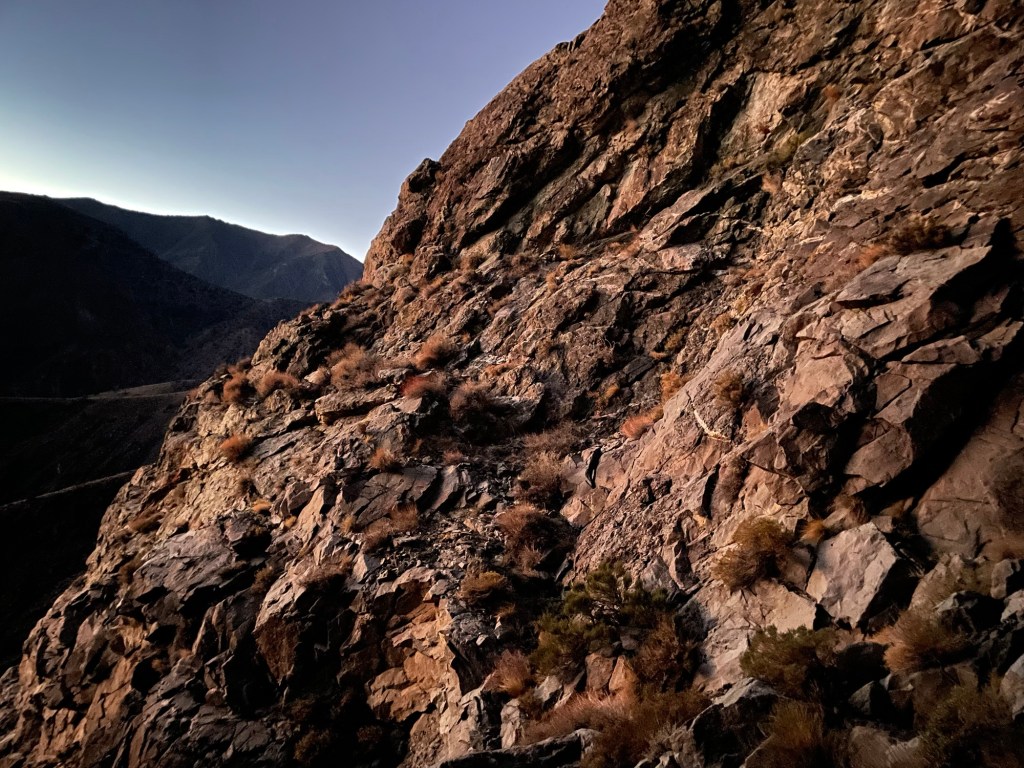
So each day, during the middle of the day I would just take my sleeping pad, which had a pinhole leak in it. I would just keep blowing it up and hold it over the top of me, just to shield myself from the sun. I only had maybe two hours of direct, intense beating sun on me before it went below the rocks on the other side. So, it could have been worse.

By the end of Friday, I ran out of water. From the beginning I was bottling my urine because I knew I was gonna have to… Friday evening I had a beer and I drank that, and then it was just urine from then on. I knew from a wilderness survival course I had taken at the U of O in Eugene, that if you’re ever in this situation, you absolutely should drink your own urine. 

But, you know, drinking your own urine will ultimately put you in renal failure, kidney failure. You’re taking back in all of the toxins that your kidneys are trying to filter out.  And that’s not good, but you need water to survive, right? Those toxins will kill you much more slowly than a lack of water. If you’re in that situation, you absolutely should recycle your urine. I tried filtering it with my water filter but that didn’t do anything for the taste. 

I had like a full bottle in my backpack, and when I reached in to grab it, I noticed that my sleeping bag was just soaking wet and I was like, “No! No! I didn’t screw the lid on all the way!” So it had leaked all over my sleeping bag. I now have a wet sleeping bag and that much less water, right? And so I was like, “well, I can’t let this go to waste. So like here goes nothing.” So I just wrung the sleeping bag out into my mouth. 

Anyway, from then on, it was just… bottled urine. 

Friday came and went, Saturday came and went. Sunday morning, I’m like, “Okay, Sunday.” That’s go time. The way I expected this to play out, my partner would call the sheriff Sunday morning and they would immediately dispatch a helicopter. They would just follow my route and then within a few hours they would find me, because I’m pretty close to my route. Like, not right on it, but I think I’m close enough to it, I think they’ll probably find me. 

So, at first light I laid out all my brightly colored gear- my bright yellow sleeping pad, flipped my sleeping bag inside out. It’s bright orange, I had a bright red jacket, no signal mirror. But yeah, I had all that stuff. So I’m laying there and I’m just like, waiting and I’m listening.

I could hear the sounds of like fighter jets off in the distance because we’re pretty close to China Lake Naval Air Station, which, if you do much hiking in the southern Sierra, or Death Valley, this is kind of the bane of people’s nature experiences- these fighter jets that are just like doing their thing all day long. And all I can hear is fighter jets and no helicopter. And the day is wearing on and still nothing.

By mid afternoon, I’m like, “ok, this is not going according to plan. They might not be coming. I need to start entertaining the notion that like, no one is coming. And that filled me with this profound sadness, right? Like it was, “ok, I have to start dealing with the fact that I might die out here.”
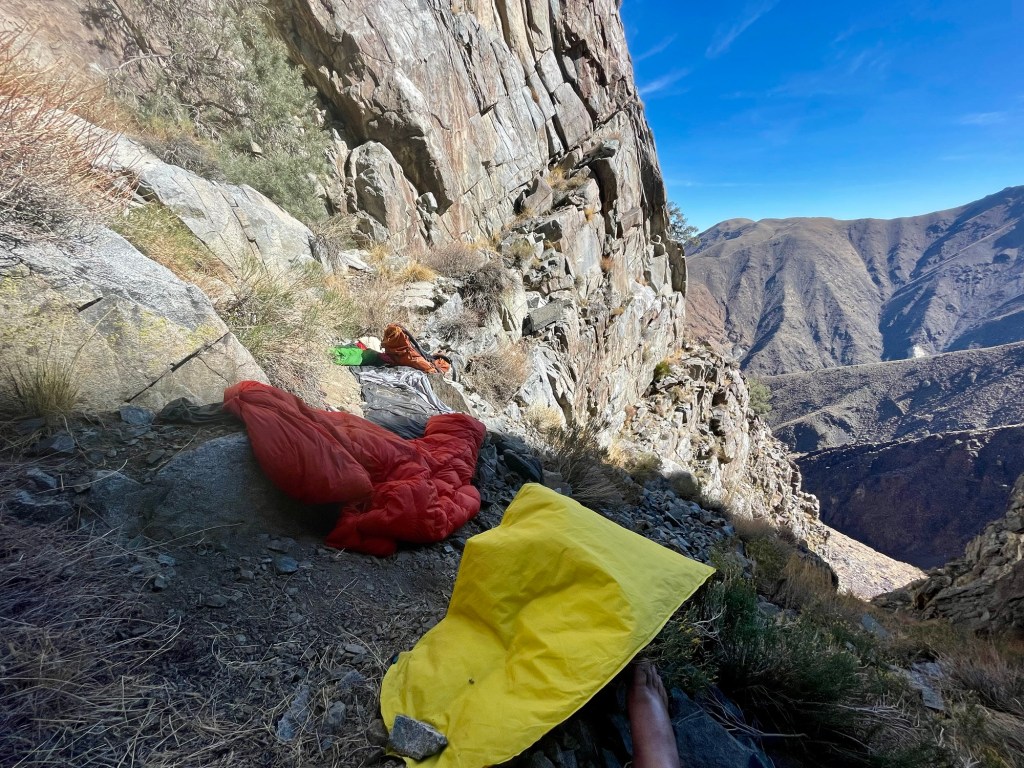
Up to this point, I was just kind of minimizing brain activity, minimizing physical activity just like… trying to be in this half asleep state where I’m consuming as few calories as possible and not worrying… Just laying there and expecting the best. But at this point… the best didn’t happen. So, now what? 

And I just started imagining like, man, what if I never get to hug my mom again? What if I never get to kiss my girlfriend again? You know… never get to see any of my loved ones ever again. I had a journal with me and I just started writing short little goodbye letters to all of my closest people and telling them what I loved and admired about them. Things I had really never found the courage to tell them in real life, especially my family members. But I just wrote it down so that I wouldn’t die without this ever having been said at least. And I recorded some voice memos on my phone.

I was thinking, “ok, well, I’m definitely not gonna die just lying here. There is a spring that’s a mile back and 1500 ft down, and I don’t think I can get to it, but I’m gonna try”. And so I was like, “all right, tomorrow morning, first thing, I’m just gonna try this.” Thankfully, Sunday night the pain had started to kind of subside a little bit. 

And so, thankfully, by Monday morning the pain was a bit more numb and it was overcast for the first time. The biggest fear I had was exerting myself and being fully exposed to the sun. I was gonna dry out a lot quicker and I didn’t know how many refills I had in me. But I had to try and thankfully it was overcast. 

So, I tied a couple of socks around my right foot and ankle just to try to stabilize it a little bit. I put my pack on and I started just lowering myself down, on hands and butt, trying to keep all the weight off both my feet. Pretty quickly, the backpack wasn’t working, so I had to take it off and tumble it down ahead of me. Sometimes it would roll like 20 ft, sometimes it would roll 100 ft and I just had to go catch up to it wherever it landed. Because that had my water–I mean urine–and like my jacket and everything. So, that’s what I did, very slowly, down this sketchy slope, and it was ok. By mid afternoon I’d made it maybe a third of the way down to this water source.

I was definitely not going to make it there by that night, but I was still in a fairly clear head space. I was really low on calories and had low blood sugar. I was all out of wet food. All I had was dry food. So I did the only thing I could, which was like, pour some piss into a packet of oatmeal–brown sugar cinnamon oatmeal–and just hold my nose and eat it. And, uh, I did and it was not that bad actually… relatively. I had that morning tried some Carnation Instant Breakfast… Oh, man, that was no good. I downed it but…  I nearly vomited. It was bad. 

Anyway, I was able to keep it down and I had this sugar high a little bit. I kept going, but the sun was getting low and then at some point I heard what I was pretty sure was either a single engine airplane or a helicopter. And then I was like, “I think that’s a helicopter” and then it got closer and closer and then this helicopter just like, appeared down below me where the canyon I’m in meets the next one over, the one that I came down prior. This orange and white helicopter. 

And I’m like, looking down and I have my red jacket with me and I’m waving it, and just screaming at them and they sit there for a minute and then they just continue down this other canyon toward the Saline Valley floor, which is not my route. So, I’m like, “why are they going this way? That’s not the right way.” I’m like, “fuck, ok, well, they’ve gotta come back up”. Maybe 20 minutes later, they come back up to that same spot. They hover for just a brief second. I’m waving at them again with my jacket, but then they disappear behind the ridge and then they’re gone up the other canyon.

I’m like, “Ok, why did they do that?” That’s not the right way, and what if that was it? What if that was my only chance? I had to then immediately dismiss that thought. It’s like, “Ok, well, then you’re in the same boat you were in 30 minutes ago, which is that you need to get back to that water source because if you can get there, someone will eventually find you. You just need water.”
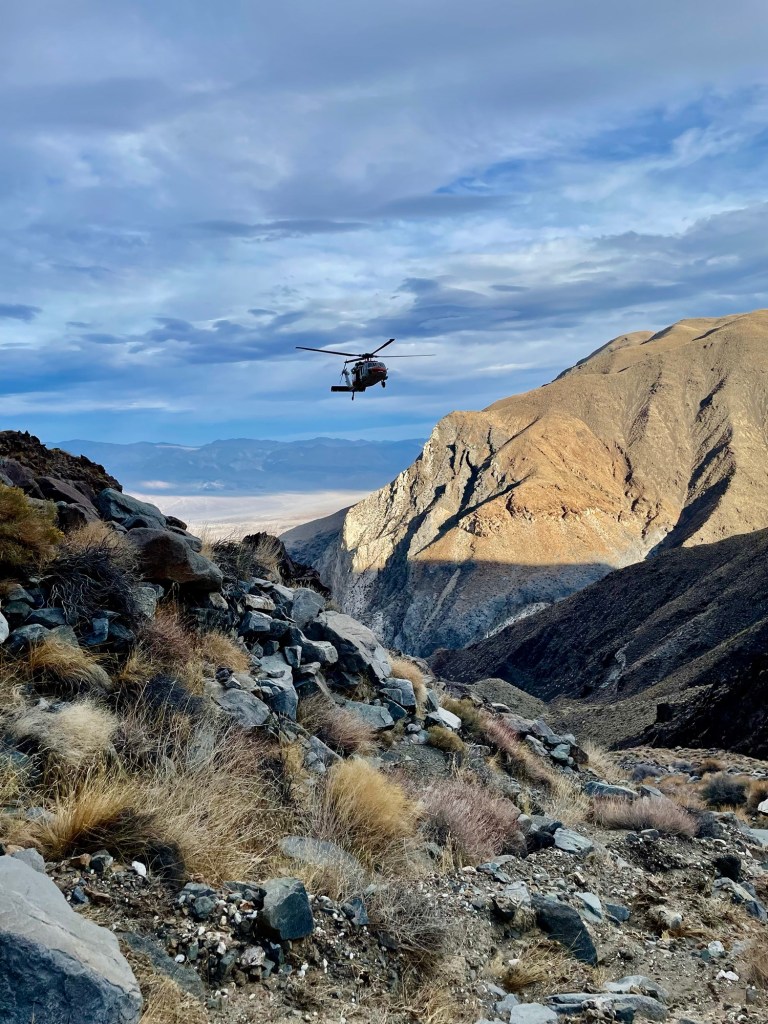
I just tried to put it out of my head. I just kept going and… I don’t know, maybe 30 minutes or an hour later… it was silent and then just out of nowhere, this helicopter just comes right over the ridge, right behind me. This was a big helicopter that says NAVY RESCUE on the bottom.

And I just remember being so elated. And just waving, like, “Can you fucking see me?” And the pilot waved back at me. It was this euphoria I’ve never experienced before and will probably never experience again–hopefully. Where it’s just like… “I’m definitely gonna live. I’m for sure gonna live.”

My phone still had some juice, so I pulled it out real quick and snapped a couple photos at this moment. They’re pretty sweet, kind of epic photos. Certainly the most epic ones I’ve ever taken on a hike.

And so, the helicopter went down and turned around. They were, I guess, figuring out what their strategy was gonna be and then it came back up, dropped a dude down on a cable in an orange jumpsuit. He landed pretty hard and kind of tumbled a little. 

And I was like, “Oh shit! Are you okay?” 

And he’s like, “yeah, yeah, I’m fine, uh… I was gonna ask you the same thing!” 

I was like, “Yeah, I mean, kinda, you know, except for my feet. Man, I’m so happy to see you!” 

He was like, “I’m so happy to see you, too!” and we just gave each other a big hug and it was really cool. Like, he was stoked. He did his whole assessment of me and then he said, “We’re actually pretty low on fuel. We were headed back to base. We definitely have enough to get you out of here. But I don’t know if we have enough to carry your pack up separately. Are you ok leaving your pack here?” 

And I was like, “Well, if I’m not gonna die, I’d love to keep my gear.” He radioed back up and they’re like, “yeah, yeah, we can do it.” They hoisted my pack up and then sent a sling down that I kind of climbed into and then they hoisted us back up, and then I had to kind of scramble through the open side of this Blackhawk helicopter. 

And then away we went.

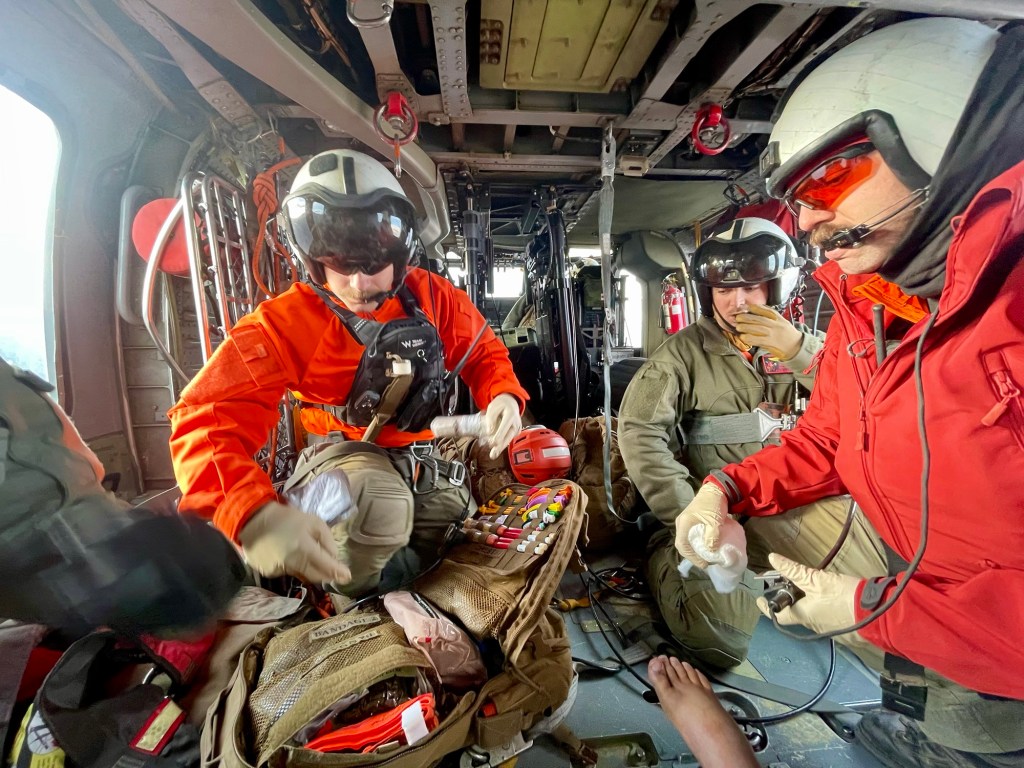
There were five people on board, three paramedics. I’m just sitting on the floor of this helicopter just looking out at the most epic sunset, with the High Sierra, Mount Whitney, to my left and then the white sand Saline Valley and Death Valley beyond to my right. And it’s golden hour. It’s like, damn, this is the sweetest ride, people would pay a lot of money for this helicopter ride. And I was like, “I hope I don’t have to pay a lot of money for this helicopter ride.”

The paramedic got the IV in me on the first try and so they’re dripping fluids into me. And they still haven’t given me any water. I’m like, “hey, do you guys have any water by any chance? And they’re like, “oh yeah, yeah, throw him a bottle of water.” This guy tosses me a water bottle. I’m just downing this thing and paramedic’s like, “take it easy, you’re not supposed to drink water that fast when you’re super dehydrated.”

They told me that they didn’t expect to find me alive. They thought that my red jacket I was waving was my tent, like, hanging from a tree, blowing in the wind or something. They couldn’t believe that I was still alert and oriented, after, you know, 94 hours since my fall and 108 hours since I started hiking. We landed at the Bishop airstrip and there was an ambulance there waiting. They put me on a gurney and I was like, “How much is this gonna cost me?” And he was like, “Don’t worry about it, your tax dollars already paid for it.” I was like, “Hell yeah. Um, how do I get your job?” And he’s like, “You gotta join the Navy, bub!” 
[laughs]

I was like, “No, I don’t wanna join the Navy.” [laughs]

With so many hard things, if you just commit to the thing and you just decide failure is not an option, then like a lot of times your mind will subconsciously do the things that it needs to do to like grab that next hold or do that skateboard trick or whatever.

They whisked me off in an ambulance to the hospital. I was in acute renal failure, my kidneys had shut down. My other organs would have started shutting down in succession after that. And that would have killed me at some point. My right foot had a super complex fracture that the orthopedic surgeon at this rural hospital in Bishop was like, “I could operate on you, but you don’t want me to. You need to go see a specialist at a research hospital.” My left ankle had a ligament injury and some other little cuts, bruises, micro fractures throughout my body. 

My mom and sister came and picked me up from Texas, drove me back home to Oakland. I got in to see one of the top foot and ankle surgeons in the country, at UCSF. Even though I was on Medicaid at the time, I got a $180,000 bilateral foot surgery for free with a really good surgeon. She did an excellent job. She got all my bones back in perfect alignment. She fused three joints, put in a ton of hardware, some pretty precision carpentry in my right foot. When you look at the x-rays, there’s a lot of screws and plates in there.

I was in a wheelchair for three months, then crutches for three more months after that. And then on to the recovery. But that’s another story. 

NORTHER: How far did you fall?

AARON: The free fall I would estimate at about 15 t and then the tumble after that was somewhere between 20-30 ft.

NORTHER: Oh my God, that’s so far. 

AARON: Yeah, it was a lot. I mean, people do survive epic falls but yeah, even a 5 ft fall can kill you. 

NORTHER: You had a full pack, so that kind of like protected you, right?

AARON: Yeah, it protected my spine. So, I had no spinal injury, which was amazing. I got lucky and didn’t hit my head, either.

NORTHER: Yeah, that’s crazy. I mean, to fall that far and not have any spinal injury is wild. 

AARON: My foot is what caught pretty much my whole body weight. So, you know, better your foot to break the fall than your back. The backpack helped and then I just happened to not hit my head so it was a totally repairable injury.

NORTHER: So, something that I noticed when you were telling the story is that when you were talking about the sort of… unhinged behavior that got you into this situation- that you were working with this kind of delusional level of self belief… It’s also sort of what helped you keep your shit together through the worst of it, because you’re able to… go wherever you need to go in your head to not freak out. 

That is a very long time to be in a lot of pain and not really sure if you’re going to live or die. Some people in your shoes would have folded, mentally. 

Most people aren’t able to compartmentalize like that and just tell themselves, “I’m going to get rescued in this many hours. This is what’s gonna happen.” I feel like those things are like two sides of the same coin.

AARON: That’s an interesting insight and not something I’ve really thought about before, but I think you’re right. I think it was that delusional self belief that definitely benefited me. It was just, like, irrational optimism. 

I’ve always kind of described myself as an irrational optimist. I think it’s generally one of my better qualities, but it doesn’t always benefit me, for sure. More often than not, it does. I guess that’s maybe the quality that’s at the heart of that and it helped me maintain this crucial belief that I was gonna survive. 

NORTHER: I don’t know if this resonates with you, but I am someone that got into doing hard shit in mountains in my mid-thirties. Part of the interest for me was that I was just so interested in where the line was, what I was physically and mentally capable of? I found out I’m good at this thing called endurance because I am really good at controlling my inner experience. So, I can walk 40 miles in a day, no problem, but that journey is mental as much as physical. 

I was never interested in sports or running or anything until I realized it was a mental game. And then I was like, really fucking interested. [laughs]
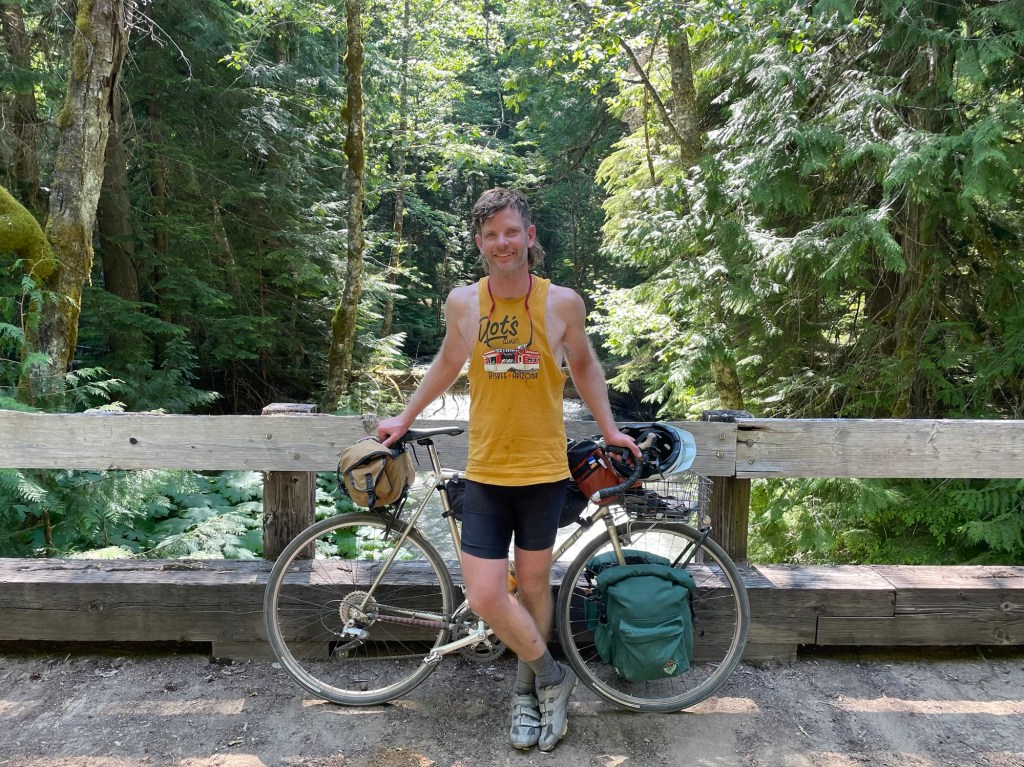
AARON: We all have physical limits somewhere. But, our brain is the only thing between us and our physical limits, you know? Generally, most of us don’t push that physical limit because our brain stops us well before we get to that point. But yeah, it’s a cool discovery, it feels powerful, and it’s fun to play with. When you know that you have the power to just keep pushing and do something really hard that you didn’t think you could do.

NORTHER: How much of your ability to survive in that situation was based on your experience and skill as an outdoors person and, how much of it was just sheer grit and willpower?

AARON: I mean, it was my experience and skill as an outdoors person that got me into the situation to begin with, right? And my overconfidence in myself… I forgot, what was the term that you used? How did you describe it?

NORTHER: Oh, delusional self belief! This is something I talk about in a positive way. As an entrepreneur, you have to carry a delusional level of self belief. Otherwise, the weight of other people’s doubts will just crush you. 

AARON: Yeah. Especially doing something like you’re doing, kind of a novel idea. Hell yeah, I love that.

I’m more apt to catch myself when I’m evaluating a risk and immediately dismissing it as unlikely

It’s a great quality. It’s both what allows me to do hard things that most people I know wouldn’t attempt and have these really special experiences. And yeah, and it’s also something to be aware of when it leads you astray, when it leads you to do things that are dangerous. Just because you think you can do something, doesn’t mean you should. 

As someone who has a pretty high risk tolerance in general, I have to temper my belief that everything will be ok with the knowledge that it might not. That’s why I wear a helmet when I ride my bike, because I know what might happen if I hit my head. I think this experience really drove that point home for me. 

NORTHER: How has this accident changed the way you spend time outdoors? 

AARON: I haven’t done a solo off-trail hike since then, which has as much to do with the fact that, at least for a long time afterwards, my foot was hurting when I would hike longer distances. That’s actually kind of subsided. But in its place I’ve been doing more bikepacking and doing that by myself sometimes. All the activities that I do on my feet, walking and running, are the hardest now.

I’m more apt to catch myself when I’m evaluating a risk and immediately dismissing it as unlikely. I’m more likely to second-guess that instinct, and give a situation a second look. Is there another way I could do this more safely? 

That plays out too, in my work as a carpenter and now a project manager who also leads projects in the field in remote places. I have to evaluate risk all the time. And, yeah, I’m a bit more cautious than I used to be.

NORTHER: What are you looking forward to for your future as an outdoors-person?

AARON: Mmm. That’s a good question. I think I am first and foremost an explorer. I love to explore new landscapes, new places that I haven’t seen. I’m most excited about doing some bikepacking trips outside the US. I wanna do one in southern Mexico next year. I think in general, the thing that orientates me towards outdoor activity now is just having fun with friends, most often on bicycles and in remote places. That’s kind of my favorite thing these days. I’ve been building new friendships around that and finding some community around that and I think that’s what excites me the most these days.

NORTHER: Hey, thanks so much for talking with us today. I’m glad you didn’t die out there, friend. 

AARON: Thank you. This was really fun. 

TOPOPHILIA: Transforming Climbing Culture and Listening to Indigenous Voices with Climbing Guide Bennett Rahn

NORTHER EMILY: Thanks for talking with us today. Would you like to start by explaining who you are and how you present yourself?

BENNETT RAHN: Well, that’s a complicated question but in the spaces that I occupy on the internet, I introduce myself as Bennett Rahn, I use she/her pronouns, and I am a plus-size outdoor athlete. That means a lot of different things to me, but primarily I’m a climber, I’m a skier, I’m an advocate, I’m a queer person.

NORTHER EMILY: What kind of language do you use to speak about your relationships with places and what are some of the places that you feel most connected to?

BENNETT RAHN: So, I’ve lived in Washington State my whole life. In the last couple of years I have spent a lot more time on the road for various reasons, and something that I have found myself kind of coming to terms with is that I get very homesick for Washington State. 

I feel very connected to the whole area. I spent a long time developing identity in relation to the Cascade Mountains, the Puget Sound and even the high desert plateau in central Washington. I feel like there is a…sense of homecoming. There’s a sense of camaraderie between me and the land here. I also I feel very strongly about anybody’s relationship to the land also being related to a relationship to the indigenous people who are native to those places, and the gratitude we can show those people.

I do spend a fair amount of time also trying to stay connected with the tribal groups in the regions that I recreate in. I love hearing their stories and their indigenous knowledge and teachings. 

NORTHER EMILY: As far as building relationships with and having respect for the tribal entities that are originally from that land, can you tell me more about what that looks like for you? 

BENNETT RAHN: I think we probably come from pretty, pretty similar backgrounds. My mom’s whole family is colonizers, and my dad is half indigenous. So, I am a white person and I definitely take up space as a white person on the internet. I do not like identifying myself as an indigenous person, but I also believe very strongly that my grandmother’s people’s identities were stolen from them on purpose. Reconnecting and re-identifying with those identities actually does the opposite of what they were trying to do. I do not want to speak for what I do not know, not being raised on reservations. I do not have a tribal membership.

There are so many rad things that you can do that are objectively cooler than sending hard.

I do think that standing up in opposition to the history of violence that was done is really important. So that’s what I mean when I talk about showing respect to these tribal nations, it’s mostly just acknowledging that they’re there and spreading their words and listening to what they’re saying, it’s not really that complicated. They have been intentionally erased over and over and over again. So, the best way to be in opposition to that erasure is by listening and letting people know that they’re here. 

I think there’s like a common thread in woke white people outdoor circles that try to be like, “Oh, well, I did a search on nativeland.ca and therefore I know who’s, land I’m on and that’s close enough. That’s good enough.” But that isn’t really enough, especially because you can tell who did the search on nativeland.ca- it’s just a list of random words. Sometimes they’re in the indigenous spelling and sometimes they use the white people spelling. 

You don’t know anything about those tribal groups. You don’t know which tribal groups have stronger affinities to that land and which ones got included in that map because they have like historical trading ties with that land, but they weren’t residents there. 

You don’t actually know the history at all and that doesn’t solve a problem, it just tokenizes them. What you need to know and you need to understand, is the history of these places. You can’t learn it by a simple Google search.

Especially with areas that I spend a lot of time in, I do try to learn as much as I can over time. Because I have lived in the Pacific Northwest for so long, I have spent a lot of time learning about these tribal groups. My grandmother’s people are not from around here. I actually know more about the tribal groups in the Pacific Northwest than I do about my grandmother’s people which are from the American Southwest- New Mexico, Arizona area. 

There are opportunities available, you just have to take them. Go to tribal centers- not to benefit yourself, not to just take part in cool cultural experiences, but to go and to learn. 

There are a lot of resources out there, and are open to the public: museums, heritage sites. There are Instagram accounts for different tribes that have a lot of great resources and talk about what they’re doing- their language or opportunities for you to support them financially or in the legislative sense. A lot of tribal groups are still trying to get federal recognition, and you can help as a constituent.

When I spend time in Yosemite Valley, for example, I’m like, “this is a fucking sacred valley and we have stolen it from these people. They are still here and we need to talk about it.” 

And yes, it really bothers me when people have only received a white people’s education about indigenous history, it is pretty frustrating.

I spent a long time developing identity in relation to the Cascade Mountains, the Puget Sound and even the high desert plateau in central Washington. I feel like there is a…sense of homecoming.

NORTHER EMILY: It’s really hard because, I think that a lot of people mean well, but they have so been so thoroughly indoctrinated into colonizer culture, as we all have, and they’re looking to other white people to educate them about indigenous issues. I don’t think most people notice or realize they are subconsciously choosing to learn about indigenous history or the truth of our shared history through a white supremacist lens, but it relies on incomplete or false narratives to avoid accountability. 

And also- I don’t want to shame anybody’s like honest effort, right? 

I grew up on the coast and I have always been really interested in the relationships that people who came before us had with this land because the coast is spooky as fuck. 

I am really guarded about the information that I will share with my white clients, because I don’t want to turn someone’s very tragic and personal history into a little story that I tell you while we’re hiking. So I’m kind of tight-lipped about some of the things I’ve learned. 

I teach foraging and I tell people right up front, “I am not gonna talk to you about indigenous uses of plants because that’s someone else’s knowledge and you should be mindful of the lineage of your teachers when you seek out that knowledge. It’s not appropriate for me to teach you medicinal, ceremonial or traditional uses of plants.” 

BENNETT RAHN: You have to build a lot of foundation before people can understand that nuance. I think that like a lot of white people have been taught explicitly and implicitly that they have the right to whatever they want.

NORTHER EMILY: Yeah.

BENNETT RAHN: That’s a really hard thing to overcome.

NORTHER EMILY: Do you wanna talk about how you got into guiding? 

I would love to hear specifically about what kind of circumstances you had to navigate in order to become a guide as a plus size woman.

BENNETT RAHN: I wanna be clear about what I’ve done, you know, because guiding is like a word that gets used to cover a lot of bases. 

I used to work and I still occasionally substitute teach at a middle school in the Seattle area that has an outdoor program and we did a lot of camping and backpacking programming there.

Now I’m a single pitch instructor which means that I can guide anything in terms of single pitch climbing. 

And what that looks like is that you have to get a certification through the AMGA, the American Mountain Guides Association. It’s a three day course and a two day exam and then you have to get your 10 day wilderness first responder. 

There are a lot of requirements to get started with that program and it was pretty significant for me to get over that hurdle. 

I’m fairly certain- and there aren’t statistics on this and I’m basing this just based off of my understanding of the guide community and the people that I know… I think I am the first plus-size certified climbing guide in the United States. 

By plus-size, I mean: the definition of a person who wears above a size 16 or 18 women’s clothing or extra large men’s clothing. 

For one, I mean, you hit the nail on the head with certification- in order to get certified to be a climbing guide, you have to be a pretty competent climber, and if you are a person who is above a women’s size 18, there are not a lot of climbing harnesses available to us, and those that were available were a kind of harness that are not safe to lead climb in. 

In order to be a guide, you have to be able to lead climb, but most plus size harnesses were like rigging style harnesses that are not certified by the UIAA to be able to take lead falls. Basically, up until very recently, it wasn’t actually possible for somebody that was my size to have access to the required technical safety gear in order to do what I wanna do. So that’s one pretty significant hurdle.

I think there’s like a common thread in woke white people outdoor circles that try to be like, “Oh, well, I did a search on nativeland.ca and therefore I know who’s, land I’m on and that’s close enough. That’s good enough.” But that isn’t really enough

Now there are a couple of brands that have sized up a little bit. There’s one brand in particular that I often recommend called Misty Mountain Threadworks that does make the most size inclusive climbing harness on the market that is good for lead climbing. 

But I think it’s also just that climbing has a reputation as a sport as being something that you have to like, be able to do a pull up. “I can’t do a pull up so, I can’t go rock climbing”. And I’m like, “I’ve never done a pull up in my entire life”.

Climbing is seen as a sport that’s all about how strong your upper body is. And so a lot of the work that I do also is to kind of try and test the notion of what your body has to look like in order to do this sport. 

I think it’s also worth mentioning that I have a pretty significant fear of falling when I’m climbing.

I’m heavier than most people that I climb with. And even though the climbing systems are rated for plenty of weight in the climbing system, there is still this issue of, if your belayer is significantly lighter than you and you fall, you are going to pull them off the ground. So, it is actually less safe for me to do a lot of climbing that has significant fall risk, because I will fall farther than a smaller person. 

I had to overcome a lot of fear and a lot of obstacles to get to the point where I could feel confident in my climbing ability to pass the exams that I needed to do, or past the requirements that I had to pass in order to get certified as a guide.

NORTHER EMILY: How long have you been guiding? 

BENNETT RAHN: I got certified in the fall of 2021. I’ve been guiding for a year and a half. I got certified while I was still working in a different profession and I don’t even guide full time. I do a lot of different things. I’m a freelancer as well, but I’ve been guiding more regularly since last summer.

NORTHER EMILY: That’s so cool.

I’m so excited to do this interview with you in particular because it’s been really hard for me to find anyone in the climbing community that wants to have this conversation.

The only time that I hear rock climbers talk about the places that they climb and the love that they have for them is within the context of access issues. Like, “Oh, we have to take really good care of this place because we don’t wanna lose access”. And for me it’s like, “I just love that rock formation so much, I want to know what it’s like to stand on top of it.”

BENNETT RAHN: It’s so funny hearing you say this because I spent the weekend guiding at one of my favorite places in Washington State, which is this area called Frenchman Coulee or Vantage. And like, it’s not my favorite because the rock climbing is any good. In fact, the rock climbing is like, solidly mediocre. The rock quality is solidly mediocre. It’s not like an incredible vista either. I just love it and like, I love it for a lot of reasons, but I just love it.

This was the first time I’ve guided professionally there. I’ve done a lot of meetups and informal things there, but this is the first time I guided there professionally. And I just was like, I was like a kid on Christmas. I was like, “I want to show you guys all my favorite places, like, have you seen this? They were like, “it’s just really cool being here with you because you love this place so much. And like, that’s contagious”.

And I was like,”Yeah, but I don’t love this place because the climbing is really rad and like, I can climb really hard and push myself. It’s like, I love this place because it smells like sage. I love this place because the camping is free. I love this place because I think the rock formations look really cool and there’s a lot of really rad geologic history that I know about this area. And like, let’s talk about it. I love this place because there’s pigeons in the crack. Isn’t that rad? I love this place”.

In order to be a guide, you have to be able to lead climb, but most plus size harnesses were like rigging style harnesses that are not certified by the UIAA to be able to take lead falls. Basically, up until very recently, it wasn’t actually possible for somebody that was my size to have access to the required technical safety gear

NORTHER EMILY: I also love Frenchman’s Coulee so much. I will just go there just to camp there and bask in the sunshine. It’s the best early season weather that you can get in the Pacific Northwest. There’s so much good hiking out there too. 

Central Washington is a wildly underrated. 

BENNETT RAHN: I also think that the Stewart Range is underrated. I know the Stewart Range gets a lot of love but, like, compared to the volcanoes, it’s not enough. 

I’m a central Washington fan. Because I grew up in Spokane and I live in Seattle, it cuts my identity in half, you know?

NORTHER EMILY: What are some of the cultural changes that you would love to see taking place in rock climbing over the next couple of years and what do you hope that people can take away from the experience of doing a guided climb with you? 

BENNETT RAHN: I would really love to divorce from the idea that the only way to be a real climber is to push grade. I think that’s still pretty prevalent and I’m pretty annoyed by it. There are so many rad things that you can do that are objectively cooler than sending hard that are like 5.7 or whatever.

If you wanna try hard, that’s cool for you. But I want you to not invalidate people that don’t want to try hard. I am a climbing guide that doesn’t like climbing harder than 5.7. You can be an incredibly effective climbing guide and only climb 5.7, if what your clients want to work on is not really hard grades. Most people seek out a climbing guide because they want to have an experience or they want to learn skills. And I think that having really rad experiences and learning skills does not actually require a certain grade.

I would love to see gyms start shifting their attitude… Most gyms require you to be able to lead at like soft 5.10 or a hard 5.9 in order to lead climb. I think that’s bullshit. I think that you should be able to learn how to lead climb at any grade, so long as you have the skills and competency to do it.

I would really love to see brands- and I think some brands are starting to do this, but there is like a pretty significant token around it- I would love to see brands supporting athletes that are doing more for their community than just like sending hard. Not that pro athletes shouldn’t also be people who like to send hard, but there should be a mix of all of that.

I really want people that are interested in the sport to understand that you don’t have to be good at the sport to try the sport. Like, how many people play soccer for fun that aren’t trying to become pro athletes? That should also be the way that climbers approach climbing. 

I want to teach people how to love the sport that I love. Not because I want people to like, try their hardest grade ever and like, push themselves really hard. Not that I don’t like encouraging people to push themselves, but what I want people to get out of an experience of climbing with me is like a love of the land, a love of the sport and more personal autonomy about the sport than they had going in.

Most gyms require you to be able to lead at like soft 5.10 or a hard 5.9 in order to lead climb. I think that’s bullshit. I think that you should be able to learn how to lead climb at any grade, so long as you have the skills and competency to do it.

I really like teaching people how to do what I love without me there. I want people to like, have agency to go out and try things without a guide. I focus on education more than I do on them just going out and climbing as much as possible. And I think that there is space for both of those things and I’m taking up space in the ways that I like to take up space.

NORTHER EMILY: Can you share a little bit about what it’s like to represent as a plus size climber and a plus size climbing guide? Is that ever a struggle for you, to have to be this role model for other people? 

BENNETT RAHN: I got an Instagram following probably the same way that Ash Manning did, which is that I posted about my life, it resonated with people, I blew up. I now have a public voice and I have to be really conscious about what I’m posting and why. 

I am under even more scrutiny than like your average White Man guide because if something that I do is not the 100% best recommendation and it gets posted on the internet. Not only is my qualifications as the guide going to be questioned because of that. But also because I’m fat and a woman and queer and have darker brown skin-  all of those things. I am a little bit more under a microscope. 

I also get in my DMs like, if not daily, then at least weekly people being like, “thank you so much for doing what you do, I tried climbing” or like, “thanks to your recommendation on this harness, I was able to get out and I had a really good time” or like, “thanks to you, I’m feeling really confident and I’m gonna go try and do this trip” or whatever and like, that’s the kind of impact I want to be having on the world. And so, if that means that I have to be more conscious about how I show up in public and on the internet and, I have to deal with trolls and people calling me names-  I’m gonna be dealing with people calling me names anyway. 

Like, I’m a fat person that shows up in athletic spaces full of straight size white people. I’m gonna get hate no matter what, doing what I like to do. So I might as well take the brunt of it and keep turning that narrative around. 

And who knows? It might not last forever. I might get tired. I might get fed up and change my mind. But right now this is the right thing to do and I feel really responsible for my community and the people that I represent, as I take up space and try to create more opportunities for us.

TOPOPHILIA: Thru Hiking the Appalachian Trail, Becoming a Whitewater Guide and Protecting Their Peace, with Ash Manning

NORTHER: To start, do you want to tell us a little bit about who you are and how you like to represent yourself?

ASH: My name is Ash and I’m from Northeast Georgia. I grew up around the southern terminus of the Appalachian Trail. My dad works for Georgia DNR, so I was exposed to the outdoors at a pretty young age, just hanging out in his management areas with him. I got into hiking at some point, I don’t really know… I just kinda got into it cause it was the only thing that we really did in our small town.

There was no movie theater, there wasn’t even a Walmart until I graduated high school, so we didn’t really have much to do. We just kinda hung out in creeks and on mountains, but we didn’t really call it hiking. We were just hanging out in the woods. I got a little more serious about hiking when I got into college, that’s kinda when I got into white water, I guess. 

My friend Carter, she introduced me to whitewater and took me rafting for the first time. I was like, “Wow, this is about to ruin my life because I love it so much”.

Around college was also the first time I really experienced people being rude about me being a little bigger, like being shown or told that I didn’t really belong, that hiking wasn’t for big people. And I was like, “Oh, what? I’ve actually been doing this for my whole life”. 

I like hiking. I like being outdoors. I’m just that person, I grew up outdoors, that’s where my happy place is. 

What people see me as and know me as is a plus size explorer, a plus size person who does all this stuff. 

I think that they really are almost two separate identities. One that is truly me and one that I kind of picked up just because I’m plus size and people need to see that.

NORTHER: I like the way that you separate those two things out. That’s actually really interesting to think about, especially when we’re on the social media, it’s almost like we’re two dimensional to the audience. They need to be able to put you in a box in order to decide, like, do I relate to this? It has nothing to do with who we are as people at all.

I worry about the young people that are on the internet and monetizing their personalities before they even really know who they are.

ASH: I felt like my personal identity was monetized for me, like, people started following me because I was hiking the AT and people were like, “whoa, you’re plus size and hiking the AT” and I was like, “Well, shit, this has been a dream of mine since I was a little girl”!

It’s really important for me to separate those two things sometimes. Like, yes, I’m still plus sized. Yes. I’m still outdoorsy. Yes, I have still experienced discrimination. But first of all, I’m an outdoor professional and then what everybody perceives me as second. 

NORTHER: Tell me a little more about your lifelong interest in hiking the Appalachian Trail.

I was starstruck by these thru hikers. I’d meet them, they’d be all stinky and gross, and, um looking back, it’s like, “dude, you’re only three or four days into the trail. Why are you so gross?”

ASH: I think some of my earliest memories of the AT are with my dad. He picked up a hiker one time when I was with him and he was taking him into town and gave him some candy bars. There were all these stories my dad would tell me, you know, cause they walked right through my dad’s management areas.

He was always talking about some of the hikers. “Oh, hey, we gotta go get a hiker, they’re stuck up on Blood Mountain. They’re all messed up”. 

Because it’s the beginning of a 2100 mile trail, my dad was always dealing with hikers in the first 70 miles of this trail— which, you know, a lot of people don’t even make it out of Georgia. To me, it was this thing that never ended. It was just a long, incredible, insane walk that never ended. I don’t even think I even understood where it went until I was probably in high school. 

I was starstruck by these thru hikers. I’d meet them, they’d be all stinky and gross, and, um looking back, it’s like, “dude, you’re only three or four days into the trail. Why are you so gross?”

NORTHER: Oh my God. That’s so funny.

ASH: Or it was the opposite end of the spectrum in the colder months. It would be a man or a woman that is finishing. Southbounders, they’re usually alone and they were like, I just remember seeing this one guy and my dad, he hitched him into Helen, Georgia. He was five days from finishing the AT and he was taking a break in Helen, to resupply. I remember I was like, “Whoa, this dude has been walking forever”. He was so cool. So, of course I was gonna grow up and do it.

All my friends wanted to, my cousins wanted to and no one I knew ever set off on that track. I was like, “well, after I graduate college, I’m gonna do it.” And… I made it as far as West Virginia, crapped my pants three times and came home.

NORTHER: Damn. That’s so for real. All those waterborne illnesses… Those are no joke.

ASH: Oh my God. No. At one point I was, like, mentally unwell because I was so physically unwell. I was just losing my mind in the Shenandoah. Finally, I was like, “Alright, this is it, this is the end, I’ve got to go”. It was so hard. My mom came and got me. God bless her. I do plan to finish it one day. I just don’t know when.

NORTHER: Somebody told me recently that the AT is harder than the PCT, which surprised me.

ASH: I heard that a lot while I was on the AT, and I had always assumed that the PCT was more difficult because like, y’all got those 14 hours out there. That’s insane.

NORTHER: Do you want to talk about at what point you decided to become a guide, and what that whole experience has been like?

ASH: So, like I said, my friend Carter took me rafting for the first time, it was super awesome. I did not know I was getting myself into.

I really wanted to be a guide, so I came back the next summer and I was like, “Hey, um, are you guys hiring? I work really hard, I try really hard, I want this”.

Actually, this is one of my first experiences of discrimination, of people not wanting my body in the outdoors.

The manager at the time, he was like, “Yeah, no, we’re not hiring, you should try the zip line.” 

So I was like, “Okay, cool, I’ll try the zip line.” Then, right behind me, this dude came in and he asked if they were hiring, and he was like, “Yeah, actually we’re hiring for whitewater guides now.” I was like, “Dude, what the fuck?” It was so in my face. 

So, I got my foot in the door with this company. And then the next year they were like, “Okay, yeah, we’ll try you on the river”, and when I tell you that they put me through absolute hell in guide school and and it was just like so fucking hard like. Looking back on it, I’m like… What the hell? I mean, it gave me a backbone for sure, but I was hazed, I was yelled at, it was like boot camp. There was a lot of unnecessary extra focus on me. I tried, I tried harder than everybody else. I was working twice as hard for half the credit.

In my second year guiding, again, people just did not want me on the river, because I’m a girl and I am plus size. 

So, in my second year guiding, they took me off the river. My managers at the time, they looked at me and they were like, “Um, some people are just better suited for office work.” And then the other one was like, “I got a really good diet and exercise plan” and I was like, “What the fuck?”

NORTHER: Oh my God.

ASH: I know. Still was like, “No, fuck this. I’m gonna raft guide here”. So, I worked really hard over the next year, and I got back on the river. Then, the next year I was on the river. And then I said, “Wait a minute”, I don’t know why I stayed there for two more years after that shit.

I went out to Utah and I guided multi day trips out there, stayed there for a few years on the Yampa. And then I came out to West Virginia, I started guiding on the New, a few years ago. And, you know, this country has got some world class rivers and one of them is the upper Gauley and I became a Gauley guide and it was one of those moments where I was like, “Yeah, fuck you, telling me I got a body that should be in an office.”

NORTHER: Yeah, that’s awesome. So you’ve been guiding for quite a few years then?

ASH: Almost a decade. After the summer, It’ll be a decade.

NORTHER: A thing that I have observed with people who just cannot keep their mouth shut when it comes to women or fat people or disabled people or chronically ill people doing things in the outdoors is that, it’s not just that they’re surprised that we have the physical capacity to do hard things.

I think for some, it comes from this place of, like, “I’ve been told my whole life that I’m better than all of these people”.

And now they’re watching a woman, or a fat person, or disabled, or chronically ill person, best them in the outdoors… they aren’t just surprised, they’re ANGRY. They are angry and I don’t think they know why.

They can’t let YOU win because it, in their mind, it says something about THEM.

ASH: Oh, I know. I actually have this guy right now that like he works at the outpost I work at in West Virginia and he’s really fucking annoying.

One thing that helped me get out of comparing myself to others is the fact that there is no one like me in white water. There’s not one guide at any outpost I’ve ever worked at that looks like me and guides like me, and gets in the boat like me and flips the boat like me. I had to make my own way.

He’s thirty eight. He’s too old to be acting like this, but he just has to act better than everybody and, you know, nobody should ever be acting like that. I’m a little more lenient towards the 18 year old that I train that act like they’re better than everybody because… they’re just young. They don’t know yet. They haven’t been humbled. I know that they’ll probably figure it out.

But this guy, he’s really amazing at whitewater. He’s really, really good at it. He would hate that I’m getting interviewed by you. He doesn’t like that I talked to bigger companies. He doesn’t like that I get brand deals. He doesn’t like that I work with Astral or do interviews or podcasts or whatever, He’s jealous and he’s mean about it. 

It’s so funny cause, like, I don’t even have to be the best. I don’t have to be really good. I just have to be enjoying myself and that’s what I’m trying to preach and teach and give people… that passion. Just love this. Love paddling, hiking, whatever. I don’t gotta be the best. No one’s gonna be the best. You just gotta be loving where you’re at. 

So many of them are like that. You’re right. It’s just… they can’t let themselves hold space for others in this industry. That sucks.

NORTHER: Earlier, you touched on this idea that it’s better to just let go of the competition and enjoy the experience which I love.

I love this idea and it really shouldn’t be radical, but the more you get into adventure sports or even just hiking- achieving and comparing yourself to other people is all there is.

ASH: One thing that helped me get out of comparing myself to others is the fact that there is no one like me in white water. There’s not one guide at any outpost I’ve ever worked at that looks like me and guides like me, and gets in the boat like me and flips the boat like me. I had to make my own way. I had to adapt. And so one thing that’s lucky for me is that, there’s, there’s a sense of individuality for me.

I’m bigger than you. Things are different for me. I can move a boat better than anybody I know, because of my size, I’m a pivot point. So, when they see downfalls, I see uprises. because they’re just looking at the small picture. They don’t see the way that my hips move in the middle of the Class V rapids with an entire boat. How I become the pivot point because I’m bigger than everybody in the boat.

You know, like I think normally there’s, there’s other kinds of people like me. But, my adaptability to guide, navigating whitewater, is completely individual because there’s not very many people in the whitewater world that are my size. So, when it comes to breaking out of that, like, comparing yourself, it is difficult.

But I think comparing yourself to another person is never gonna work because everybody’s body is so different. Everyone is so individual and different and has different needs as far as the way we move, gear and everything in between.

I don’t like going with the flow of the people because the flow of the people usually means that I’m putting myself in the boxes that were never even made for me.

I want to encourage people to go their own way. And you know, there’s a saying in thru hiking, “hike your own hike”. Fuck what everybody else is doing.

NORTHER: That’s awesome. I love that.

I want to ask you about gear and clothing- How much sizing inclusivity in the outdoor industry has changed over the past five years?

ASH: So, four or five years ago, maybe even three years ago… Brands were, um, this is a weird way to say it but… both open and not open to having that conversation.

Like there was pushback, but they would talk to you. I could get a hold of brands and talk to them about this kind of shit. And they might come back with, “Oh, well, we don’t have that clientele” and I was like, “Well, you don’t know, you can’t have the clientele until you sell the clothes”.

Now, I don’t know what’s happening. Brands will not talk to you about size inclusivity as of very recently and it’s kind of weird.

A lot of big brands are hiring PR firms so that they don’t have to directly talk to us, which I think is a bummer because you’re not having a real conversation.

It’s very difficult to talk to brands about- “It’s really awesome you went up to 2X or 3X but, um, you know, to be truly inclusive, you should go up even higher”.

That conversation is really difficult to have with a lot of these brands. They don’t want to go up, they don’t care to go up. They don’t think that they should go up, which is a bummer because it’s like, well, even just making it available online, which is still like not the greatest, should be on your radar. They don’t want to have this conversation. They think 2-3X, that’s it. We’re done.

The only company, the only company in the whitewater industry that works on inclusivity, is Astral and then a kayak brand that I’ve been talking to called Versus, and… The only reason Versus is talking to me about possibly making a kayak better suited for plus size kayakers is because one of the guys that runs it is a good friend of mine. I have reached out to so many companies that could be groundbreaking, especially in the whitewater world, and they won’t have that conversation with me

While the hiking industry has grown, like, we have so much more than we ever had before. I know for sure the climbing industry has a lot of pushback. I’m positive canyoneering industry has pushed back. I’m positive anything in the outdoor industry that is outside of hiking and backpacking— they don’t care one bit. They don’t give a shit. They don’t want to be part of the conversation.

I don’t like going with the flow of the people because the flow of the people usually means that I’m putting myself in the boxes that were never even made for me.

When I first got to the New River Gorge, me and my big fat body was the talk of the gorge. I got no respect even though I’ve been working on Class V rivers longer than probably 75% of the guys there. It didn’t matter, they all saw me as this rookie fat girl. And then there was something that happened that changed the minds of an entire outpost.

It was a different company. There was a flip in a Class V and no one was moving. There was my company and two other companies sitting in an eddy and no one was moving because it was a private boat and we were about to watch these people die.

I was like, “Hell, no, not today!” because I don’t want to see anybody die.

I settled up my boat and I shot across the current and I got these people right before this major feature in the rapid. It was like a last chance eddy. I was scared that me and my boat were about to go into this feature and it would kill us. But we got these people and thank God we did. It took risking my life, the life of my guests, to try to save these people that were certainly about to die if no one else moved.

It took that to get to gain the respect of half of the company.

NORTHER: Damn, that’s fucked up. Good for you for doing something. But like… you shouldn’t have to risk your life or anyone else’s to go do something nobody else is willing to do before people are willing to treat you with respect.

How do you protect your energy when you’re surrounded by people that are doubting you constantly. What is the secret to protecting your mental health?

ASH: I think I go through phases of protecting myself in that capacity. I have to remove myself from those people or that situation. I’ll surround myself with people that do hold me in high regard, love me and support me. My friends, my peers, my partner- they support me.

People are gonna have opinions of me no matter what. I just know that I am doing good and I have to remind myself of that. My friends are really good at reminding me, too.

NORTHER: Thank you so much for talking with us today, Ash.

ASH: Thank you for having me.

Photo: @

TOPOPHILIA: Overcoming Fears, Writing Guidebooks & Finding Friendly Forests with Hike Oregon’s Franziska Weinheimer

Welcome back to TOPOPHILIA! This month, we spoke with Franziksa Weinheimer of Hike Oregon. Franziska and I discuss her love of hiking and backpacking, the places in Oregon that are most dear to her heart, how she overcame her fear of wildfire, and all about her online brand as Hike Oregon. Franziska is such a gem and getting to chat with her about our shared love of hiking was a real treat!

NORTHER: Can you tell us a little bit about your upbringing and how much you were exposed to the outdoors as a child?

FRANZISKA: I did and didn’t grow up in the outdoors. My parents were both very athletic, so I grew up doing sports and just being active. I was born in Germany and we moved from Germany to the States when I was six. In Germany, there’s nature and stuff but it’s nothing like here- there isn’t like huge, wide open spaces. Europe is definitely more developed, you’re always gonna see some farm house or grazing cattle. It’s very rare that you’re just in the middle of nowhere. 

We got to experience that when we came over here and my dad really fell in love with the outdoors, especially the Three Sisters area. I actually summited South Sister for the first time at age six, that was really special. I have a picture of me and both my parents on one of the snow fields. I really wanted to touch the snow, so that’s what got me up the mountain at that young age.

My dad would take me hiking as I grew up, and then he moved to Atlanta, Georgia. I would live one year with my mom and one year with my dad- that was their custody agreement. In Georgia, we discovered the Appalachian trail and did some hiking in the Smoky Mountains and stuff like that, which is so different than Oregon, but very cool to experience the different forests. My dad is a professor, so he would have summers off and he always planned pretty epic backpacking adventures. I’ve backpacked in the Alps, Alaska, we did a pretty large section of the Appalachian Trail. Every summer we had some sort of adventure like that.

After around high school age or so is when I kinda stopped doing all that. I got into, you know, my own stuff. I did a lot of music and stuff like that and the outdoors wasn’t super important to me at that time of my life. After college I had a period of time where I was really depressed and trying to find my way, and that’s where the outdoors came in again. 

I went on a hike- I actually went to Blue Pool- and I absolutely fell in love. It reignited my love for life. Being among the trees and just seeing everything was so vibrant outside-  the moss, the trees, the river, the sound of the water. 

We jumped into Blue Pool, which is very cold. We didn’t do the crazy cliff jumping that a lot of people do- that is so dangerous. We were just down at the bottom and jumped in the water for like one second, then screamed and came out, but it was so invigorating. From that point on I was like, “Okay I have to experience that feeling again.”

I had some old Sullivan guide books that I started looking through and I just checked off one hike after the next. Every single week, I would do one or two hikes out of one of the guide books and that’s kind of where my love for hiking really took off. 

That first book I really went through- I did all the hikes in that book. I still have it and it’s all taped up, it was totally falling apart by the end. It has definitely been loved.

NORTHER: You’ve always lived around Eugene in Oregon, is that right?

FRANZISKA: Yeah, I’ve never lived anywhere else in Oregon.

NORTHER: Are there particular places around the northwest that really speak to your heart?

FRANZISKA: Yes, definitely. The best way I can describe it, and I know other people have described it this way also, is just a feeling of home and belonging. 

When I’m hiking or backpacking, I also describe it as friendly forest. 

So, when I’m backpacking through the forest, sometimes it doesn’t feel so friendly and I feel I wouldn’t really want to set up my tent there. But some forests I walk through and I’m just like, “Oh, this is a friendly forest. All I want to do is set up my tent and just sit there and listen to the birds and just be.” It very much feels like just a sense of belonging, like you belong there, very peaceful. A sense of calm.

A place that I think of when I think of this feeling is Golden Lake, in the Three Sisters Wilderness, nestled between South Sister and Broken Top. 

The first time I ever hiked to Golden Lake, we arrived at the lake and I started crying, and… I don’t know, that had never happened to me. I had been hiking for quite a few years at that point and that had never happened to me.

I was overcome with this sense of emotion and I just started crying, it was so beautiful. I just wanted to stay there. I wanted to build a cabin and just live there. I did not want to leave. It was so amazing.

I have been there many times since and every time I go there I’m like, “Yeah this is my place.”

Another place that I feel very at home is the Pacific Crest Trail through Oregon. Now, I’ve done sections of the PCT in California as well. But specifically in Oregon, I just feel at home. Even if I have not done that section of the trail before, I feel like it’s familiar, I feel like I belong there. It’s very comforting. 

This past summer, I was doing a solo backpacking trip and it was a loop hike and part of it was on the PCT. On that section of the trail I was like, “Oh, I feel so good, I feel so confident. This feels so epic and so right and I feel so safe.” 

As soon as the loop exited the PCT and I was on another trail, I started feeling an unfriendly forest vibe. And I was like, “Oh, now I don’t feel so confident”! I got to this lake where I thought I was gonna set up camp and I was like “nope, absolutely not. I can’t do this, I don’t wanna stay here” and so I just kept walking until I felt a friendly forest vibe and that’s where I set up my camp. But for some reason as soon as I get off the PCT, I just don’t feel at home. So, yeah, PCT is definitely one of those places

NORTHER: I love that. I spent a lot of time hiking alone and I always feel like the PCT is like when you’re burned out and tired and maybe like a little lonely or like you just want like a little an occasion to interact with someone else. There’s always somebody on the PCT that needs to share a snack with you or whatever, like there’s always like somebody bopping along.

FRANZISKA: Yeah, there was always a friendly face. I like the sense of community that we all get to have on PCT knowing that there are people who are just walking from Canada Mexico. It kind of encourages you to be a little more friendly and generous with your stuff.

NORTHER: Do you wanna talk a little bit about Hike Oregon and how you started that?

FRANZISKA: Yeah, I started the Hike Oregon website many years ago when I was doing the all the Sullivan hikes. This was before all of the hiking blogs existed and AllTrails and all of the resources that we have today that are online. I basically just had the guidebook. Sometimes I would take my younger siblings and they were like 10 and 8 at the time, so I felt great responsibility. I’m taking children out into the middle of nowhere! I wanted more information about these hikes then was given to me in the guidebook. I wanted more pictures, I wanted to see what the trailhead looked like, I wanted to see the trail tread and you know, is it safe for kids? I would look up these hikes online and just not find any information.

I was thinking, “Okay, well, I can’t be the only one who also wants more information about these hikes in Oregon.” I was taking pictures at the time- I had a, you know a nikon DSL or camera and I was taking photos and I was like, “Well, why don’t I just do a short little write up and put a ton of the pictures that I took on a website.” So I called it Hike Oregon and after I had 15 hike write ups, I decided to launch the website and it just slowly kind of took off on its own. I built a small community over time; I started a facebook page and then later added instagram. I started a YouTube channel in 2016 where I featured some of the hikes through videos and also informational videos about hiking and backpacking and stuff like that. 

I started writing hiking guidebooks, because I like a book better than an online page- I think a lot of people do. They like having that physical thing in their hands or something they can take in the car. You don’t always have phone service where you can look stuff up, so it’s nice to have a book sometimes. 

So, that’s kind of how it grew over time. 

Right now, it’s changing a little bit. I wrote three books in a time span of four years, so I kinda got burnt out on writing and I’m taking a little break on writing guidebooks for now. I have some ideas of books I want to write, coming up in the next few years but right now I’m taking a little bit of a break.

A new project is my podcast called “Hikers Anonymous Podcast” and it’s definitely a different kind of thing than what I have been doing.

I feature people’s stories about how the outdoors have positively impacted their lives. I really want to share people’s stories and inspire others to get outside and maybe it can help other people. So, that’s kind of another little avenue that I’m taking versus just providing the information. It’s a little bit more personal, so I’m really excited about that project.

Another thing I’m working on is little tiny booklets that are based on hikes around certain towns. So, a lot of my hiking guidebooks are either the entire state of Oregon or a large region. I call it “Hike Oregon’s Favorites.” So it’s gonna be 10 hikes within an hour’s drive of Eugene or Florence or Oak Ridge. I’m working on my first one of those right now which will be for Eugene. 

I think that will be really fun for people because not everyone has the whole day to go out on some adventure, some people just wanna take half of a saturday to go do a short little hike. I think this will make it a lot easier and make the outdoors more accessible for everyone.

NORTHER: Yeah, I imagine, you know, when you come to a new area, especially when moving to Portland— and Seattle I’m sure is this way too— there is so much to do that it’s kind of overwhelming.

I have a client right now who is new to Portland and he’s like “where do I start?” I was like “okay, you gotta start with the classics, man. You gotta go to Helens, Hood, and you gotta do the big popular hikes that everybody loves first.”

FRANZISKA: Yeah, I mean they’re popular for a reason. But it’s overwhelming because when you when you google, you know, ‘hikes around Portland’, I mean you’re gonna get hundreds of pages and hundreds of options and yeah, where do you start? It’s very overwhelming.

NORTHER: I think when you can picture something in your head, it makes it more accessible, especially if you’re like me and you get a little anxious about trying new things, being able to visualize yourself going step by step through the process is really empowering.

And I think that might be why all of your very informative content is really inspiring to people, because they can see themselves on the trail and have had all of their questions answered ahead of time.

FRANZISKA: Exactly, exactly. I think that the fear is what keeps a lot of people off the trail. Yes, they know they might be physically able, they might be wanting to do this but I think fear is what stops a lot of people. They don’t know what the road is gonna be like to the trailhead. That’s intimidating sometimes, you know once you get off the main highways. A lot of the time dirt and gravel roads that are intimidating to people. Knowing the road conditions and, you know, is there a pit toilet at the trailhead?

NORTHER: There’s still some pretty substantial areas of Oregon that are really hard to find information about. As an example, Sullivan’s eastern Oregon book covers two thirds of the state, but the number of entries for Southeast Oregon is very very small.

FRANZISKA: Yeah, for as much hiking information and data there is online, there are still massive gaps in content and I think that if you are just casually consuming that type of content, you might think that it’s been overdone.

NORTHER: One of the things that I’ve been talking about a lot lately, that I would love to hear your take on, is the difference between fear and risk.

FRANZISKA: The stranger danger definitely gets to me sometimes and I do let that fear dictate what I do, I think in a healthy way. You can have that fear and just be like, “Oh well, I’m not going out by myself at all.” I still obviously I solo hike and solo backpack but I try to do it in a way where I’m going to places where I feel safe. I don’t generally hike by myself in places that are close to towns like Oakridge or Sweet Home. There’s a lot of back roads where you see people doing… various activities. So, those are places I do not hike by myself but you anything that’s far out of town…. people aren’t driving three hours to go do crazy stuff. In very distant wilderness areas, I’m not afraid of stranger danger or my car getting broken into and my tires getting stolen.

Another thing I’m afraid of that does have some risk is I’m really afraid of wildfire? Like, being trapped in some sort of wildfire situation. I would say it started in like 2016 and in 2019 it was really bad. It was to the point where like my fire anxiety was so bad that I canceled trips, because I was so afraid. So, since then, I’ve done some work on this fire anxiety and I’d say I’ve gotten really good, I’ve worked through it and it no longer affects me to the point where it’s gonna ruin a trip or where I’m gonna cancel something. I think knowledge is power whenever you’re afraid of something.

So, let’s say you’re afraid of snakes, well, do a ton of research on snakes. See where they live, how they live, how they act when they’re in certain situations, do all your research. It almost takes the power out of your fear.

So, basically, I just did a ton of research on wildfires and like talked to wildlands firefighters and I did so much research on how fires act, how they start, how they grow, how they travel… that’s really really helped me.

NORTHER: Yeah, that is definitely like a legitimate concern. Like, as soon as you said that I immediately thought of the 2017 Eagle Creek fire when all those people were trapped on the trail, right?

FRANZISKA: Um, exactly, That’s exactly what I’m afraid of. 

NORTHER: What are some of the places that you are heartbroken over having burned recently? Have you also seen places bounce back really quickly?

FRANZISKA: Places that I’m devastated about? Yeah, the recent Waldo lake area fire. It just devastated so many trails that were already not really maintained very often. When trails like that burn, they become non-existent because they don’t get rebuilt. 

I would say I was really surprised with how quickly the McKenzie area has bounced back, especially in comparison to the Detroit area because those two fires happened at the same exact time.

The McKenzie area has bounced back just incredibly fast. There’s so much lush greenery already growing. driving through there you would think, oh this burned like many, many years ago, not, it just burned, um what, in 2020? The Detroit area is still absolutely devastated.

NORTHER: I still haven’t driven through Detroit….

FRANZISKA: It’s not great.

NORTHER: I assume you are like me; that you plan things in advance, especially if you have big projects planned. How has fire season changed the way that you structure your time in the summer, because they tend to come up at the very peak of alpine summer hiking.

FRANZISKA: Oh, for sure. I would say since 2020 I started kind of planning things a little bit differently. Like you I would save the most epic things for August, September. Now, I’m finding that I’m planning a lot of stuff in July? Previously, I would not really plan a lot of backpacking stuff for July because of mosquitoes. 

And I’ve gotten to the point where I’m like, “you know what, I’m just gonna do it anyway, screw the mosquitoes. I’m just gonna go prepared, you know, with my mosquito net, I’ve sprayed my clothes with Permethrin!!I’m not saving this for later because it’s not probably not gonna happen later.” I don’t really plan specific backpacking trips for august anymore. I might have certain dates that friends have set aside, where we know we want to go somewhere, but until it gets closer, we don’t really plan the trip. What’s the use of spending hours planning something and then we can’t go? We might plan like three or 4 options to choose from, but we don’t actually set anything in stone until it gets closer.

NORTHER: Yeah, I think that makes sense. I’m kind of the same way when when when you, when you have synthesized as much um hiking beta as we have, it’s like “do I need months to plan a trip? I don’t really, it’s just for fun.

What do you think is like the biggest misconception that people have about doing this kind of work. I know for me, people think it’s so fun and easy to be a guide just taking people hiking, and they don’t realize all the work that happens on the back end.

FRANZISKA: I would say is that most people think that I hike all the time, and yes, in certain times of the year, if I’m doing book research, I am gone a lot of the time… but, you know, I’ve only written three books, so that doesn’t happen often. Most of the time I’m hiking one day a week and the rest of the time I’m in my office. 

I think most people would be shocked at knowing that that most of my time is spent at the computer.

When people ask what I do for a living, I say I’m a hiking guidebook author because there’s so many different aspects to my job. You know, I could say I’m a youtuber, but to a lot of people that has a negative connotation.

NORTHER: I find that very relatable. Well, thanks for taking the time to talk with us today! It was so fun chatting with you, as always.

FRANZISKA: Yes, thanks! You too.

Franziska Weinheimer, a 20+ year resident of Eugene, has been hiking and backpacking in Oregon since she was a small child. She first summited South Sister at the age of 6 where her love for the Oregon Cascades began. After college she rekindled her love for the outdoors and was always trying to find new places to explore. Franziska grew increasingly frustrated with the lack of information about trails online. A lot of them had little to no information, no photos, or the websites would have varying mileage and misleading directions. Franziska took it upon herself to create a website where she would provide accurate mileage and elevation information, good directions to the trailheads and lots of photos so travelers would know what to expect. Since the start of www.hikeoregon.net in August 2014, Franziska has explored over 500 different trails around Oregon, and continues to add new hike write-ups to the website. In July 2016 the Hike Oregon YouTube channel was born, where folks can learn the ins and outs of hiking and backpacking and where some hikes are featured in video form for viewers all around the world to enjoy. Franziska is also the author of the following hiking guidebooks: 

’52 Hikes for 52 Weeks: In the Willamette Valley, Central Cascades & Coast’ which was originally published in November 2018 and republished/updated in late 2021.

Oregon’s Best Views: 50 Breathtaking Viewpoint Hikes’ which was published in March 2021.

‘Lakes of the Cascades: 50 Enchanting Oregon Lake Hikes’ which was published in May 2022.

TOPOPHILIA: Relationship With Place and the Humbling Unpredictability of Elk with Hunting Guide Tyler Houck

Welcome back to TOPOPHILIA! This month, we are talking with hunting guide Tyler Houck. Tyler leads guided elk hunts on the Zumwalt Prairie in Northeast Oregon, and has a long personal history of intimacy with the land. In this interview, we discuss the practices that allow us to learn a place intimately, lessons we’ve learned along the way, and what it means to be a skilled hunter.


TYLER: I had never heard the term topophilia before, but I instantly recognized it in myself when I did. Is this a patented word? Can I use it in scrabble?

I want Topoholic to be a word. Does that even work on a word building level? 

NORTHER: What are some of the places you feel that connection to?

TYLER: I became obsessed with a piece of ground to the point that I quit my full time job and began ignoring the other places I used to hike, hunt and explore. It is around 30,000 acres or 50 square miles. Something that, depending on terrain a person could walk across it in a day. Rolling prairie plateaus of bunchgrass that break over into canyons that then dive thousands of feet to the Imnaha river below.

I am a hunting guide on a property that is managed for conservation. The native bunch grass is the main focus but in that is a hunting program that generates funds for local nonprofits and charities. It allows the general public access for meat hunting and has 4 public trails designed to inform about the land and animals there

I see myself doing this as long as I can. This piece of land is as important to me as anything else at this point and it would be hard to leave.

Tyler Houck, Hunting Guide

I think to be a true hunter and more than that, to guide others… I need to know the place and an environment on the same level as what I am hunting.  I have never felt more connected to a place than when I have looked at it through the eyes of a hunter and a guide. 

When I am hunting elk I am not hunting only the elk. I am hunting the topography that they live in. Where is the water, the feed, the shelter? I sit in one spot all day. Where are the places that are warmest or coolest? The places always in shadow and those that never are. There are the things that I can see like trails, ponds and then those I can’t like the wind and the rivers of air flowing over the land taking my scent in front of me.

I thought I knew something about hunting. I grew up accompanying my grandfather on long walks where he carried a rifle and I held my tongue. I never did great in school too much staring out the window.  Letters like ADHD and OCD got thrown around a lot. My mind was quiet when I was outside, in the woods by the creek that wandered behind my house. I would spend summers by myself; not lonely, just by myself. Building trails, treehouses and forts. Looking for arrowheads and other treasures, valuable only to young people of a certain age afflicted with limitless imaginations. 

I knew every inch of the 7 acres. The best berries, the worst poison oak, where the rabbits and squirrels lived. The deep parts of the creek where tiny salmon survived the summer and the gravel bars that they would return to. It was my whole world. A place I didn’t feel judged for being awkward and strange.

“I have changed my mind on what a skilled hunter is. It is not someone who knows all about everything to do with hunting or a species, it is someone who can and is willing to accept that they don’t know everything and that they are always learning.”

Tyler Houck, Hunting Guide

I grew up, I went on adventures. I learned I could not work inside or live in a city.  I discovered a place that fit me and moved there. Surrounded by mountains and canyons it has the feel of an island, secluded. You have to be headed here to get here.  Not on the way to anywhere, a dead end.  

I worked jobs to make ends meet like we all do.  Jobs that didn’t fit or left me resentful that I had only weekends to explore. An opportunity came up and I made a choice, I took a chance and I settled for less money but more time. 

I found again what I had missed from those woods and streams in my childhood… I learned more about the land and the animals on it then I ever had before in my life. I realized how little I knew about hunting and I immersed myself in the topography to try and change that. I set about exploring these new-to-me 30,000 acres. Walking the perimeter, exploring every canyon, sitting next to elk herds and watching hawks. 

Time speeds up and my mind slows down when I am there. A day goes by in a few hours, miles seem to shorten and food is an afterthought. I gave up exploring the millions of acres surrounding it and obsessed on just getting to know the land that I was responsible for.

NORTHER: Why do you think outdoor popular culture is so obsessed with bucket listing? I talk to people all the time who can’t understand why I don’t pursue international travel or even leave the Pacific Northwest very often. I already carry around six lifetime’s worth of objectives in the Oregon desert in my heart, I don’t really have time to worry about how cool Montana is.

TYLER: You remind me of something that my grandfather told me once about how he didn’t need to go to far away places, that there were many lifetimes of things to explore right here in Oregon. Other than his time in the war in the Pacific, he spent his whole life exploring the oregon outback as he called it. The jungles of the coast range hunting Roosevelt elk and black tailed deer. The canyon lands after chukar and Huns. Exploring ghost towns and high deserts.

Bucket lists are understandable to me. It fits into the mindset that many have in this world that in order to live a full life there are certain milestones that have to be met. 

The quantifying, compartmentalization and listing out of things gets rid of the adventure of it. Expectations can be a terrible thing, people get so focused on a certain metric that they forget to enjoy themselves. I find this in the hunting world with the obsession over trophy score on an animal. 

I have had people shoot massive bulls that were disappointed in the score and then others that shot smaller bulls and had the time of their lives enjoying the experience.

NORTHER: I love what you said about how your relationship with place informs your work as a hunting guide- I often describe my work as hunting without the animals or the guns. That’s what I told the BLM when I applied for my Deschutes canyon location. They were not sure they wanted anyone guiding off trail hiking and I was like, “please explain how what I’m doing is different than elk hunting”. They had nothing to say, so they gave me the permit.

Most people would think that only hiking and hunting on the same fifty square miles of land would be boring and limiting, but limitations encourage us to go deeper.

TYLER: Even 50 square miles sounds big now that I hear someone else say it. An even more reductive way of describing it is seven miles by seven miles. Knowing I was limited forced me to memorize every gully, canyon and water hole. There are places I still haven’t been and they stand out in my mind as irritatingly blank.

I became obsessed with a piece of ground to the point that I quit my full time job and began ignoring the other places I used to hike, hunt and explore. It is around 30,000 acres or 50 square miles. Something that, depending on terrain a person could walk across it in a day.

Tyler Houck, Hunting Guide

The thing I was most surprised about was how little I actually knew about how to hunt this terrain. I have changed my mind on what a skilled hunter is. It is not someone who knows all about everything to do with hunting or a species, it is someone who can and is willing to accept that they don’t know everything and that they are always learning. Complex systems are just that; complex. Humans seem to stand in front of a complex system and attempt to reduce them to understandability and the things we can control.

I am reminded about this every time I make a definitive statement about elk. It is usually prompted by a question like “where are the elk at this time of year?” Or “what are those bedded bulls going to do this evening?” I have to catch myself because my experience so far is that I will be right maybe 40 percent of the time. There is no easier way of looking foolish than to tell a client that elk will always do something. Within minutes you will probably be proven wrong and I often have been.  

There are negatives sometimes.

I am never bothered the long hours kneeling on a carcass in the snow as it gets darker and colder.  in order to put on a pack that weighs half my weight and climb several thousand feet out of a canyon. 

The challenging thing for me and I’m sure many people that are used to being alone in the wilderness is, of course, other people. 

It is one thing to hunt by yourself and be successful but to get someone else in the right position at the right moment can sometimes feel like a miracle when it does happen.  

The mindset toward hunting, the land, the animals of some of the clients I have are not always my own. I cannot control others or to many extents their experience. But I usually have more than enough time to talk about my views and what I find ethical or not. 

I have come to see them more as learning opportunities. 

NORTHER: Regarding what you said about making definitive statements about elk-

The land I guide on in central Oregon is primarily used by hunters. It’s an old ranch that sits above the Deschutes, the Criterion Tract, across from the warm springs reservation.

I moved out to Tygh Valley in 2019, and I started running in the Criterion four days a week. I didn’t have a lot of choices for places I could trail run. I heard that people hunted elk out there, but every week for four months, I saw no elk, no prints, no droppings, nothing.

I told my ex, “there’s no elk out there.”

One day I hiked in from a different side of the tract, and I went down into a steep canyon. The wind was blowing really hard that day, and I was heading into the wind when I came back up the canyon onto an old road.

Soon as I popped up on that road I saw I had just come up thirty head of elk standing maybe 20 feet from me on the other side of a road. I just stood there in shock with my mouth open until they finally noticed me and the whole gang of them peeled off into the canyons together.

I went home and told my husband, “well, it turns out I don’t know shit” 😂😂😂

There’s a lot of canyons I still haven’t been in out there, and I never did see the elk herd again.

I’m pretty lucky that most people choose to work with me because of my mindset and values around connection with place… but working with clients and connecting with other outdoors professionals, other guides has highlighted for me how the values and sense of connection I feel are kind of woven into the culture of the Pacific Northwest in a way i sometimes take for granted.

But, regarding mismatched client values, at least for myself, I think as adults we are all used to acting like we have life figured out. I think of the conversations I have as planting a seed. They might not reflect my values back to me, but hopefully my example lives on in their subconscious.

“I think to be a true hunter and more than that, to guide others… I need to know the place and an environment on the same level as what I am hunting. I have never felt more connected to a place than when I have looked at it through the eyes of a hunter and a guide.”

Tyler Houck, Hunting Guide

TYLER: Elk are humbling in their unpredictability. The statement I don’t know shit about elk is probably the wisest thing to say.

The idea of remoteness and what constitutes wilderness is one of those questions that seem to be interpreted differently in the northwest, where we are surrounded by it. One person’s wilderness is another person’s backyard. 

NORTHER: Do you see yourself staying on the prairie forever?

TYLER: I see myself doing this as long as I can. This piece of land is as important to me as anything else at this point and it would be hard to leave.

Cold winter nights are good for dreaming up hikes I want to do and looking at blank spots on my map. I’ve been dreaming up canyon hikes that follow elevation lines for a bit now. Instead of climbing to gain elevation you can stay level and the canyon will drop away underneath you. 

I get most of my ideas for hikes while I’m on a hike or exploring a certain area. Right about the time I have to turn back I will see where I should go next time and it kind of grows organically from there. My usual exploring schedule has to do with elevation more than anything. Canyons and low elevation in the winter then slowly following spring and summer up into the mountains.

With the amount of places to explore here in north east oregon I doubt I will run out of spots or get to see them all in my lifetime but I will try.

“When I am hunting elk I am not hunting only the elk. I am hunting the topography that they live in. Where is the water, the feed, the shelter?”

Tyler Houck, Hunting Guide

NORTHER: Any words of wisdom for the city folk who haven’t found their way home to the forests and steppe yet?

Having a adventure doesn’t have to be a epic struggle. Finding a quiet place in the woods mountains or canyons and spend a afternoon learning it. You will be surprised at what you find. Hopefully that doesn’t sound to cliche but really it is what it’s all about.

TOPOPHILIA: Risk Management, Fear, and the Love of Climbing with Climber & Mountain Athlete Brad Farra

NORTHER: To start, why don’t you tell us a little about your background and upbringing in the context of the outdoors?

BRAD: I grew up doing regular kind of stuff; just sports and playing outside, nothing too outside of the ordinary. I was in the navy as a helicopter rescue swimmer for six and a half years, and then got out, and got pretty serious about climbing. I was still doing a lot of triathlons and running and adventure races, mountain biking, and cycling. I was climbing for the first ten years of the 2000s along with all that stuff, and then kind of dropped it all in 2011 and just focused on climbing. I got really big into ice climbing and alpine climbing after 2008, and now I do ALL of the climbing. I go to the crag, I go ice climbing, I do alpine climbing; I enjoy putting it all together in the mountains; that’s probably my favorite aspect of climbing.  

NORTHER: In Wild Solitude, we talk a lot about Intimacy with Place or Relationship with Place. Another term is TOPOPHILIA, which is the name of this interview series. Do you find that concept resonant at all?

BRAD: Yeah, I definitely feel that a big part of being outdoors is a connection to a place, as well as the person you’re climbing with. I feel that it’s just as much getting out there into the wild and having a good experience with your climbing partner all around. A big part of taking care of the wild places that we go to is making sure that we are doing as much as we can to preserve these places.

NORTHER: I loved what you said about the partner aspect, it’s an experience that I was really missing out on when I was just hiking. Everyone that I have had as a steady climbing partner is something I have a deep level of feeling for, even though the original intent behind the relationship was purely practical.

BRAD: Yeah, I think the more epic adventure you have with somebody, the deeper the connection.

“What’s great about rock climbing is that someone who is a beginner can have the exact same experience as a professional climber in terms of training and improving and reaching goals, which makes it different than a lot of other sports.”

Brad Farra, Climber & Mountain Athlete

NORTHER: What is your relationship with risk, both outdoors and in your day-to-day life? There is a misconception that adventure sports athletes are more inclined toward risk taking behavior- despite quite a bit of evidence to the contrary?

BRAD: Well, risk management in my daily life isn’t anything too crazy. The most dangerous thing I do in my day-to-day life is probably driving to work. I was introduced to risk management in the navy, as a helicopter rescue swimmer and EMT, and part of a flight crew. Risk management in the mountains is a little bit different, but you kind of take the same process. In the aviation world, you follow checklists. In the mountains, you kind of walk yourself through a mental checklist and walk yourself through all the potential bad things that could happen and make sure you’re prepared for each and every one of them.

Sometimes that means backing off before you’ve even begun- you look at the weather, you look at the Avvy report, and you just don’t even go. Sometimes you get to your approach, and you end up backing off even there. Sometimes you get halfway through and go, “oh, that’s not right, time to go”.

NORTHER: Since you have a military background, where you had already developed the skill of risk management, do you think that the way you evaluate risk has changed at all over the course of your athletic career?

BRAD: Yeah, it’s definitely changed. I’ve made bad decisions, I think everyone has made bad decisions, I think luckily, though, most of us get to live through and learn from our bad decisions. Failures are always opportunities to learn and luckily my decisions haven’t been bad enough to injure or kill me. So, get to reap the benefits and sit back and look at those mistakes and learn from them.

I’d like to think that I’m constantly learning, adapting and morphing my process, by learning from others and learning from my own mistakes. Just simply thumbing through the accidents of North American Mountaineering every year is always enlightening, even though it seems like people make the same mistakes year after year. Rapping off the end of the rope, and so on….

NORTHER: I talk to people about fear a lot. As I launched this guiding service, the conversations I’m having are not what I thought I’d be having a year ago. Initially, I thought, “Well, I’ll just teach people foraging and navigation and help them build confidence and competency. Once they see that they can master this one area, it will help them build confidence that will help them spend more time in the outdoors. And… it actually doesn’t work that way, because people aren’t concerned about the logical risks that the activity presents. Instead, they have subconscious fears and cultural stories that they are operating within…

What I’m observing is that people with less experience in the outdoors tend to prioritize those kinds of cultural fears over the actual risks of hiking or being in the mountains. I’m wondering if you have any theories as to why that is and what kinds of transformations you observe in someone as they go from lay person to becoming an adventure sport athlete? Somewhere in that transition, you let go of the idea that there are cougars and bad guys trying to get you and you become more respectful of the actual; dangers- like slimy log crossings, rockfall, and driving home tired?

BRAD: You know, it’s an interesting thing, I don’t know where the transition happens, but I think you’re right- early on, we have all these silly stories lodged in our heads because we’ve watched too many movies. We have falsified the actual risk, and put it into the wrong place. As we get more experienced, we realize, our risks are actually different than where the movies placed them. And then we get more experience and we start to develop our own narrative, and we learn, “Hey, these are the things we need to pay attention to. Maybe if I know it’s going to be a sixteen-hour day, don’t plan to drive back tonight.”

The transition between having illogical fears and getting to a place where we are telling ourselves the right story and paying attention to the right things… I don’t really know what happens, I think it must just be experience, working with other, more experienced people, and learning from others. Reading from authors that tell us the right stories and tell us the things that we should pay attention to.

“Failures are always opportunities to learn and luckily my decisions haven’t been bad enough to injure or kill me. So, get to reap the benefits and sit back and look at those mistakes and learn from them.”

Brad Farra, Climber & Mountain Athlete

NORTHER: So, I sent you a link to a study…

[Expert and lay judgements of danger and recklessness in adventure sports]

BRAD: That was so detailed…. [laughs]

NORTHER: I found it really interesting that the experienced athletes were weighing the statistical risk as well as the experience of the person, and that they layperson was not really prioritizing either one of those things but instead was kind of looking at other factors.

BRAD: Yeah, the layperson part of that makes sense to me, but, like how often do you think of the statistical risk of a given activity? [laughs] I guess I’m not because maybe I just don’t know the exact statistics. Like, the likelihood of being caught in an avalanche… Yeah, it’s pretty low, but every year you hear about people getting caught in avalanches and even hear about avalanche forecasting professionals getting caught in avalanches. Which tells us- the science and the prevention that we do is still not perfect. I don’t even know that I can take that into account when I’m making decisions about whether to go or not go, or back off, or whatever.

NORTHER: Yeah, I think there might be a certain person who actually looks that stuff up and tries to quantify it, but I think in that study that statistical information in that case took the place of the experiential knowledge you gain interacting with other climbers, or whatever your sport may be.

When I first started climbing, I definitely did not respect the more mundane dangers. Now that I’ve climbed for a while, I’ve heard a lot of stories about people dying or being seriously injured on an approach. That was something I was probably not thinking about right out of the gate. “Oh, the approach is not big deal. A little third-class scramble- no big deal.” Or, like, Slimy log crossings… I just did one yesterday. [laughs]

BRAD: Like, over a raging stream? [laughs]

NORTHER: Yeah [laughs] I was only a half mile from the car, so if I fall in, it’s not like I’m looking at a hypothermia situation, I’m just going to be cold and grumpy and ruin the snack in my bag…

BRAD: What you said, though, is about considering the consequences of a given activity. You know, with the log crossing, “this stream isn’t going to kill me. It’s not raging fast enough; I’m going to be able to get out of it. I’m not going to break my leg, but I am going to get cold and wet and ruin my lunch, but I know I’ll get back to the car and be able to change clothes”.

 Whereas, if you’re on an approach and there’s Avvy risk, well now all of a sudden, I have to think about the approach as being just as dangerous as the climb. Or, am I on exposed third class scrambling that turns out to be just as dangerous as the actual climb. I think that’s always a good thing to think about: what is the actual risk of taking said activity. 

NORTHER: After I had my accident in 2017, an older climber from Yosemite left me a comment on my blog, and said this thing that I think about all the time. She said, “every climb is a life, with a potential death attached. Oftentimes, the easier climbs kill more people, simply because they are climbed more often.”

BRAD: Which is another statistical thing, right? Everyone likes to throw out, “my drive to the crag is more dangerous than what I’m doing at the crag.” but when you correct for the number of people driving vs the number of people climbing, is that actually the case? I don’t really know, but it’s also not something I really think about- how many people get hurt rock climbing. It doesn’t really change my decision about whether or not I’m going to climb, because lots of people make really bad decisions. I see them at the crag all the time… climbing without a helmet, the belayer has no idea what they are doing, someone lead belaying from a lawn chair, something stupid like that. 

I’m not sure that we can really follow all the statistics because the statistics don’t necessarily apply to people who follow all the rules and take ALL the necessary precautions to mitigate risks as much as possible, when the people creating the statistics are not taking as many precautions 

NORTHER: That’s a really good point.

For me, the thing that really sticks in my side is the idea of risks that we are acclimated to versus novel risks. Like, hydroplaning 500 yards on I-84 between two semis, with a cup of coffee between your knees. We’ve all had that experience as drivers in the Pacific Northwest.

BRAD: Scary

NORTHER: That stuff is really scary to me. When I started rock climbing, I became a safer driver. I was like, “why am I thinking about risks in the mountains and not taking that same way of thinking home back home? So now I don’t speed or drive aggressively and I keep the ego out of it.

BRAD: Right along the same lines of reducing the stress of driving because of the risk management you doing the mountains, I’d like to think that adventure sport athletes can take that same idea and reduce the stress in their daily life. Because, if you don’t finish that report by tomorrow, nobody’s going to die. [laughs] Approach things a little bit differently and de-load some of that stress that other folks can’t really rationalize.

“Every year you hear about people getting caught in avalanches and even hear about avalanche forecasting professionals getting caught in avalanches. Which tells us- the science and the prevention that we do is still not perfect.”

Brad Farra, Climber & Mountain Athlete

NORTHER: Yeah, that’s really challenging.

What kind of fears do you still experience in the outdoors?

BRAD: Well, I think fear is a healthy thing, you know, I have fears of all the things I’m managing in risk management. I am afraid of avalanches; I have seen them in the mountains and I do everything I can to avoid…… In ice climbing, the medium is just so different, something I fear is falling on lead while ice climbing. I’ve done it before and I certainly don’t want to do it again. It’s kind of a rule in ice climbing; the leader doesn’t fall.

I’ve made mistakes in the past and you think back to those mistakes, so you continue to learn from them, and keep them in the back of your mind, so you don’t repeat them in the future. Things that are outside of our control, objective factors like falling rock or crossing underneath a serac that is going to move at some point in time. Crossing over snow bridges, over crevasses. You’re roped up, and you’ve taken all the precautions that you possibly can. I’ve fallen in crevasses; I’ve had partners fall in crevasses roped up. And everything’s gone…. as well as it can when someone’s fallen in a crevasse [laughs]

Those are the things I fear, certainly the fear isn’t crippling, but it helps guide decision making and keeps us safe,

NORTHER: I mean, risk is its own reward, right? If you didn’t ever try anything that had a negative consequence potentially attached to it…. what are you even doing in life?

BRAD: Yeah, you’re right. Sometimes the magnitude of the reward comes from the amount of effort that you have put into something and sometimes that effort has risk associated with it.

NORTHER: I think been true in my experience. The amount of effort coupled with the context that you can build for a place… I feel like mountain climbing sets you up for this kind of really great mindful experience that I wish I could translate to other sports more easily, because you have to know the terrain, and know what you are doing, and know the names of the features along the route, and things you can see around you as well.

BRAD: Yeah, it can be hard to translate what we experience in the mountains to someone who plays basketball. Basketball is a neat sport, but it’s hard to translate what happens in the mountains for someone who plays ball sports, you know?

NORTHER: I do watch people who know how to play basketball really well just in awe. How do you… I mean I can’t even dribble a ball; you know? [laughs]

“Sometimes the magnitude of the reward comes from the amount of effort that you have put into something and sometimes that effort has risk associated with it.”

Brad Farra, Climber & Mountain Athlete

BRAD: Those are totally different skills, it’s a totally different world. I played ball sports growing up, and I was solidly mediocre. [laughs]

NORTHER: I am definitely a below average athlete, but you just put in the work and then go do the thing.

BRAD: It’s amazing to see someone find their sport, because you don’t really know. Maybe somebody loves to play soccer but they were born to be a baseball player, and they just don’t know that. Using some of the greatest climbers in the world as an example… That person not only is really talented and hardworking, but they’re genetically gifted in a way that makes them better at that sport.

NORTHER: I am not any way gifted at rock climbing, I’m a very mediocre climber, but…. rock climbing is such a weird sport, too, because it’s very comparison based. Like, you know what grade you climb, you know what people are doing around you.

BRAD: What’s great about rock climbing is that someone who is a beginner can have the exact same experience as a professional climber in terms of training and improving and reaching goals, which makes it different than a lot of other sports.

NORTHER: I had a conversation recently with someone and he was like, “well, I thought I needed to be a 5.12 climber…’ and I was like, “who said you needed you climb 5.12?”

5.10 used to be all there was and it was good enough for everybody else. You can climb any mountain being a 5.10 climber! What is waiting for you on the other side of being a 5.12 climber, really?

BRAD: My advice: Try hard, have fun, get into the modality of climbing that you love the most, and get better and have fun.

NORTHER: Awesome. Well, I can’t imagine a better ending than that. Thanks for talking with us today.

BRAD: You bet.


Brad Farra is an avid climber and all around outdoor adventurer.  He has been focused on climbing objectives for over a decade and loves being in the mountaints.

He works professionally as a Sports Chiropractor and Strength Coach at Evolution Healthcare and Fitness.

TOPOPHILIA: Intimacy With Place Interview Series with Guide Book Author Matt Reeder

NORTHER EMILY: So let’s dive in and talk about the crowding issue. You and I have both lived here for long time.

Matt: I moved out here to Oregon from Illinois when I was seven. One of the major reasons we moved out here was that my stepfather really loved the outdoors- as soon as I got to be about 9, 10, we started going hiking, about 1990.

I grew up in Salem. We used to go to the Jefferson area, Opal Creek, little North Santiam River and they were never all that crowded for the most part.

Jefferson Park was crowded, Opal creek was crowded, but they were crowded in the way that something like a gorge hike on a really rainy day in the winter would be crowded now. I mean, you would see 10 to 20 other parties over the course of a day. In the places that weren’t crowded, you never saw anybody, other than the occasional hunter or the lone hiker.

Nothing really changed that much in the nine years I was growing growing up in Salem. Opal Creek became more crowded because it became more famous, but otherwise everything was kind of just the same.

I moved away for college and I came back eight years later. I’d never hiked in the gorge until I moved back here and even then the gorge didn’t feel that crowded for the most part. There were more people than I had grown up seeing on the trails here, but it still wasn’t like it is now.

The pandemic really accelerated it, and the rise of the Internet as a place for people to find ideas, along with hiking as a leisure activity. When I was growing up, you tell somebody you’re going camping and they just assumed you were some outdoor nut.

Now I feel like everyone goes outside and it’s also a huge attraction for people when they move here. So, you get this confluence of events that have made hiking and exploring the outdoors just insanity in a lot of places. When you combine that with ease of access, like you get for the gorge near Portland, or all of Central Oregon, you get crowding that is just so overwhelming.

For anybody like me, and I’m guessing you too, you can’t deal with it. You’ll find someplace else to go. For the popular hike, you’ll go on a miserable weather day or you’ll go on a weekday.

That’s just the way it is.

Having led hikes for the Mazamas, crowding has become such a problem that we’re not even allowed to lead hikes in certain places anymore.

I remember, like, six years ago my wife and I and a couple of friends went to Seattle for the weekend to go see my baseball team play, which doesn’t happen very often.

I don’t think I’d realized how much worse it is in the Seattle area compared to here because the hike that we did was apparently so popular, we couldn’t go more than 30 seconds without seeing another person. Even Eagle Creek here, you can still go and have five minutes, 10 minutes between seeing people, but this was like every 30 seconds, I couldn’t believe it.

This was six years ago, I can only imagine it’s gotten worse during the pandemic.

NORTHER EMILY: I love that more people want to go outside but I hate that people feel so entitled to an experience that they’re willing to park illegally or hike a crowded trail beyond the point that it’s reasonable or fun. You need to have a plan B, and a plan C.
The only other issue that I really take with it is just that people feel like they are ready for an experience, when the only way they can handle it is as long as absolutely nothing goes wrong, there are no obstacles, no adverse weather. They’re confident in their ability to follow the trail, the little human highway through the woods, but possess no other skills AT ALL of any kind.

NORTHER EMILY: Let’s talk about the Salmonberry! I fucking love the Salmonberry. I have to be a guide because I love places like this so much.

I found Beaverslide road on accident, and you know how great it is when you don’t know that something’s there and then you find it? It really it’s another level of magic.

Matt: I’ve always been too afraid to drive that road.

NORTHER EMILY: Oh my god, it’s awful. It’s like 1400 ft of loss in 1.4 miles.

Matt: That’s no joke

You’re making me immediately want to go back there because I have avoided the area ever since they closed the rail line to hiking.

I’ve avoided it because I love that area so much. But also, I have a slightly different relationship than a normal hiker would.

I really, really love the canyon. I think that at some point they’re probably gonna have to reopen the train tracks because I don’t know if they ever get the rails to trails done. People ask me when that’s gonna happen, I’m like, “I don’t know, 2040? Think about how much work they actually have to do to reopen that!”
NORTHER EMILY: I go way into the history of this area when I guide people out there and it’s absolutely insane that they put a railroad up that canyon; the most landslide prone, deepest, darkest, primeval canyon in the entire coast range.

I’ve only hiked part of it once, but it was amazing, just amazing.

Matt: I did each end at least twice and every time, I was just like, “I wanna come back, I wanna come back, I wanna come back”…

I don’t know why it had never occurred to me to just walk the roads, but it just never had, and now every time I see one of your posts, I’m like, “damn it, I need to go do that.”

NORTHER EMILY: You gotta go walk the North Fork, it’s my favorite hike to take people on. It’s so fun to tell the story of the area and the history.

One time, I met these old guys up there. I had taken my friend and mentor Stevan Arychuk out to the Salmonberry. We were hiking along in the rain and this truck drove by… Well, they went down the north fork road, and then they turned around and came back up and stopped and talked to us. These two guys were in their seventies, at least. They said they were brothers and they told me that they had put the railroad tie through the tree up at camp nine in the sixties.

Locals are such a treasure trove and especially in the Tillamook they will talk your ear off for an hour and tell you about Bigfoot stories and all their cool secret spots.

MATT REEDER: Wow that’s that’s truly special.

NORTHER EMILY: Why do you think Portlanders were always so resistant to hiking in the Clackamas area?

MATT REEDER: You’re the first person to ever asked me that- who actually knows what they’re talking about!

It’s true, I mean, I love the Clackamas, but I think for a lot of people, they have this impression of Estacada, like you’re gonna get murdered.

You said something recently on instagram that I could have applauded 100 times, which was “put down the murder podcasts.”

You’re not gonna get murdered up on the Clack and believe me, I have seen some sketchy shit up there. Anybody that spent time up there has seen some really sketchy shit. I could go on and on about that, but like at the same time, even that shit is less dangerous than being in a city, is less dangerous than driving to the trailhead.

I’m sorry, the chances of you being held up at gunpoint or murdered aren’t that high, the worst thing that’s likely to happen is somebody will break into your car and try to steal something?

I think people just have this impression of the Clack like it’s lawless territory where bad things are gonna happen and that’s also part of the appeal for people who actually love it?

That’s why I feel like I miss it acutely. I just I miss it. It’s like something is missing- I would go up there in the winter and just tool around the canyon, go explore the Fish Creek drainage. I don’t know if you ever got to explore Fish Creek?

NORTHER EMILY: Oh, yeah I did. I was just looking through, I have your Mount Jefferson book, which is excellent…

MATT REEDER: Thank you.

NORTHER EMILY: ….it really filled an important gap in the hiking book arena.

I was just flipping through and I was like- “there’s so many hikes I never got to do!” If I had known that it was all gonna catch on fire, I would have hiked Rho Ridge when I had the chance, you know?

Matt: Well, you know, Rho Ridge wouldn’t be that bad now either to be honest with you. I drove right through there. It burned pretty badly but the forest there was already pretty sad and in second growth anyway, I think the fire might actually improve it a little bit.

NORTHER EMILY: Interesting.

Matt: Did you did you see [on social media], back in August, I was driving home and there was a giant accident on 22. I had to come up with a way around, otherwise we would have had to back-track three hours.

NORTHER EMILY: I don’t think I caught that one.

Matt: Yeah. So, I was driving back from Central Oregon at the end of August, I’d gone on a friend’s camping trip, I needed a break from guidebook research. There was a giant car accident. I think it was a semi truck hit a van or something. 22 had to be closed for several hours and they had to have everybody drive back to Central Oregon or down the highway 20 to get to the valley.

So I thought, “okay, I know there’s another way around this.” I had two of my good friends in the car and I drove up into the Elk Lake Creek area and I knew that there were a couple of roads in that area that connected. I was able to get around it and we got on highway 46, not far from Hawk Mountain, there is a road that connects through there.

NORTHER EMILY: Elk Lake Creek was so freaking beautiful.

Matt: Yeah, the way you described going to some place for the first time, it was just like, “how is this even possible?”, was how I felt about Elk Creek. That’s the place that I still feel that way about it. I refuse to put that in any new guidebooks for the same reason. I have to hold on to something, you know,

NORTHER EMILY: Where do you stand with the ethics of sharing locations?

MATT REEDER: Mhm. That’s been a difficult one for me. The delineation that I drew was, “is it on trail?” If it’s on an official trail, then you share it. If it’s on an unofficial trail, but it’s an obvious trail that already existed then, yeah, I’ll share it. Is it off trail? Then, no, I will not tell you where it is.

It took me a long time to come to that conclusion and it’s like okay now maybe there there are exceptions to that like, if off trail involves walking along the beach. Well, that’s not hard to navigate. Your footsteps will be washed out by the tide. Are you walking along the Ridgeline, and all you have to do is scramble up some rocks, 50 ft to the top for a view? Yeah, I’ll be glad to share that.

But something like an off trail waterfall, generally, I’m not gonna tell people where it is… I’m not gonna give you a letter by letter directions on how to get there.

I’ve done a lot of off trail stuff, I just don’t write about it. It’s not a good idea for anybody or for the land to tell people how to find an off trail destination in very simple terms, because it makes people get kind of cocky about how to deal with, how to figure out off trail things on their own.

NORTHER EMILY: I like I was saying earlier about like finding beaverslide and not knowing it was there. The joy that you experienced by finding something that you worked really hard to get to is so much greater than finding the most beautiful waterfall ever.

I’ve worked really hard just to take a look at some medium grade waterfalls in the coast range, you know? And they were beautiful. They were amazing, because I got to express my physical abilities and practice practical skills, it was like a multilayered experience.

MATT REEDER: Those have been some of my favorite experiences… I’ll name a name just to do it, because nobody will be able to go there again anytime soon. I managed to finally get to Opal Creek falls three years ago, the giant waterfall at the head of Open Creek Canyon and that was incredibly difficult. That’s the hardest bushwack I have ever done. I was so, so proud that my friends and I did it. I wish I’d had ropes, that’s how hard it was.

I don’t know if you know Tim and Melinda, the waterfall gurus…?

NORTHER EMILY: I don’t know them personally, no.

MATT REEDER: Yeah, they I’m sure they’ve been name dropped, but even they were like, “wow, you made it there.” Opal Creek Falls is one of the hardest things, but the joy that I felt that day was…., it was a childhood dream. I’d seen a picture of it when I was a child and I knew it was there because I used to go to Opal Creek all the time. That was more satisfying to me than most of the on trail hikes that I’ve ever done. But… at the same time I wouldn’t flat out tell somebody how to get there. I don’t mind, naming, saying what it is, but it really depends on the situation, too.

So, it’s a hard dichotomy because, if you do anything in a public medium, like you and I both do, you reach a certain point where it’s like, “what do I share versus not share?” You have to come up with your own personal set of ethics. I think on trail versus office something that I’m personally okay delineating. But…. there’s some things that I hold on to myself, like? certain places that are, you know, 100 yards off of a maintain trail. Or a campsite that I won’t put on a map. Things like that I’m happy to hold on to myself, just so it doesn’t get blown up,

NORTHER EMILY: I talk to people a lot about releasing the expectation of reaching a destination. I can’t tell you how many times I’ve hiked up the ridge next to whale creek and I have never been to the furthest falls to the big one.

MATT REEDER: I never got up that creek either. Tim and Melinda invited me several times. It just never happened. I would have loved to have gone up Whale creek before the fire. I feel bad about that.

NORTHER EMILY: The lower part of that creek is probably the most beautiful place that I ever saw in the area. The lower two falls; they’re not that exciting, but they were awesome! You hike through this beautiful creek and then drop into an awesome canyon! I always went with the intention of reaching the tallest falls, and then I either ran out of time, I realized I wasn’t in it, realized that I was like not up for the push and I decided to drop in on one of the lower ones and and enjoy what I’ve done.

The last time I climbed Saint Helen’s, I was like somebody’s mom, up there, fucking scolding everyone because there were there were kids climbing up there with no gloves on?

The Saint Helens Institute could not hold your hand more when you buy a permit from them, they babysit your ass with all of these detailed emails and there are still people out there, not prepared for the snow.

It’s insane to me how the more people you put together in the mountains like that, the dumber everybody gets…… I’m not gonna put that in the interview.

[laughs]

MATT REEDER: I see that, too. I see it, too. I think anybody who spends a lot of time outside sees that, and it’s just disheartening and frustrating.

NORTHER EMILY: It’s frustrating when at the same time, those are the people who are like, “you shouldn’t be going off trail” and “you shouldn’t be hiking alone”. Like, you need to handle your own business before you mind mine. I grew up outside, I’m up from a commercial fishing family, I was outside every day of my childhood. The things that people scold me from doing now are things I’ve been doing since I was a little kid.

MATT REEDER: I can believe it. I feel bad for you, because, I think what you do is a great thing and people just… I learned the expression “haters gonna hate” and it really helps me to not internalize some of the stupid stuff that I see on the internet… just, “haters gonna hate”.

It’s admirable. I mean, I believe me, if I didn’t love french so much, I’d be very tempted to just quit and write full time. I have nothing but admiration for you and for other people that decided to make this their livelihood because it’s it’s not easy and requires an insane amount of work.

I already work 20-30 hours a week on writing on top of my job, so I can’t even imagine how much you’re working.

NORTHER EMILY: Thank you, I appreciate being seen in this because I think a lot of people think it’s really cushy, it’s definitely not.

NORTHER EMILY: So… somebody shot at me on Wildcat Mountain last fall.

MATT REEDER: That’s one place I won’t go back to.

NORTHER EMILY: I went to McIntyre ridge twice in one summer and both times I was like… “the trailhead’s not here, what’s going on, this is a shooting pit?!”

MATT REEDER: I won’t go back there for that reason. That area, that part of the Clack, I will not visit. It’s the places that are closer to the small towns that have rough roads- those are the ones that you need to avoid.

The other one that I won’t do is Butte Lake, which I never go to, even though theoretically that should be in the Jefferson book. I never got there because the year before I put out the Jefferson book, there was someone who had caught Butte Lake on fire and shot up the entire bathroom. I was like “Yeah, I think I can pass.”

MATT REEDER: Do people ever give you shit about solo hiking?

NORTHER EMILY: [Laughs] Oh my god, yeah, all the time, like it’s their job. I just laugh in their faces. I mean, sometimes, a little cute old person in the gorge will be like, “ma’am, you should not be out here by yourself.” But… yeah, people on the internet give me shit about it and I’m like you gotta be kidding me.

MATT REEDER: They don’t give me even half as much shit as they give you or my other female friends, it’s sexist. It’s just pure sexism.

NORTHER EMILY: Absolutely. People are just so uncomfortable with the woods and uncomfortable with themselves and their own abilities that they can’t stand seeing someone they subconsciously see as lesser doing something that intimidates them.

MATT REEDER: People don’t give me shit about hiking alone, it’s only people like you and my lady friends who hike solo, and they’re like, “I actually feel safer solo”.

NORTHER EMILY: As a woman, I am always statistically safer alone, but that’s certainly not the narrative being portrayed. Funny, isn’t it?


The Ruddy Hill Press is the brainchild of author Matt Reeder. Matt moved from Illinois to Oregon at age 7 with his family. He grew up hiking and camping all over the Pacific Northwest; he never felt more at home than on the trail. He moved back to Illinois at age 16 but returned 8 years later to settle in Portland. Since moving back to Oregon in 2005 he has logged more than 5,000 miles on the trail and has hiked the vast majority of the trails within a 2 hour drive of Portland. Off the Beaten Trail was his first hiking guidebook, published in the spring of 2013. Matt is also the author of PDX Hiking 365 and 101 Hikes in the Majestic Mount Jefferson Region. His new guidebook Extraordinary Oregon will be published in March 2023.

TOPOPHILIA: Intimacy With Place Interview Series: Canyoneering with Mike Peterson

Welcome back, everyone! Today, we are so excited to share our recent conversation with Pacific Northwest canyoneer, Mike Peterson.

Mike shares with us his perspective around time spent outdoors, places that feel like home, self improvement, and having no chill. We dive into a canyoneering mishap he recently experienced that could have been fatal, the way common mistakes can cloud our critical thinking, and how he imagines this incident will shape him going forward.

NORTHER EMILY: So, I was talking to [photographer and cave explorer] Josh Hydeman about a creek in the Gifford Pinchot and he was like, “Oh, well, you should just talk to Mike about that because he goes there every day”.

MIKE PETERSON: I don’t know what he’s talking about… unless it’s… Big Creek?

NORTHER EMILY: Yeah. I think so…

[Laughs]

NORTHER EMILY: So, the concept that I wanted to talk about with you today is topophilia; which is a sense of attachment or connection to a place. At Wild Solitude, we call it “Relationship with Place” or “Intimacy with Place”… but that’s a very flowery term for what I think is a very universal experience.

I was wondering if you have a phrase or a term that you use to describe your relationship with certain places?

MIKE PETERSON: I think about it in terms of feeling. It usually just feels like home. I mean, all nature does, but certain places just kind of fit, or I fit in them, if that makes sense. It feels no different than being at home with my dog.

NORTHER EMILY: Do you want to talk about what some of the places are around the Pacific Northwest that feel like home to you?

MIKE PETERSON: Big Creek is definitely one of those, I think it probably is for a lot of people who canyoneer, too. It’s unique for the area, in that it’s just a big, encompassing canyon. Once you’re down inside that place, you’re away from the rest of the world.

I feel that way about most places in nature. In the northwest, obviously, I spend a lot of time in canyons, so that’s the first place I get pulled to, but there’s definitely lots of other forests around my house that I spend time in.

For me, it’s anywhere that I can be isolated. Usually, off trail is my happy place.

I really dig places that are close by, right? Places where I can take off an afternoon and go out there, with my dog or by myself, so I can get that peace of mind that we’re all seeking out in nature.

Any kind of little trails near my house, or Eagle Creek trail is a great one… not the Gorge Eagle Creek, but Mount Hood Eagle Creek. Its a well manicured trail, but there’s hardly ever anybody on it. It’s just this peaceful little slice of old growth. Salmon Huckleberry is the same way. Even my backyard- I have a canyon in my backyard, I go out and hang out on the bedrock.

It’s pretty easy to find that intimacy you talk about anywhere in nature for me.

NORTHER EMILY: The Eagle Creek Trail is so underrated, and that whole area of the Salmon- Huckleberry. When I realized the Douglas trails connects and you can hike there from highway 26 over Wildcat mountain, that kind of blew my mind.

Do you want to talk a bit about how you got into canyoneering; I know that you are new to the Pacific Northwest…

MIKE PETERSON: So I started off trailing in June of 2020, and very quickly just jumped into it with both feet. I went from trying to get to places that were on the waterfall survey to trying to locate waterfalls that hadn’t really been figured out.

I was out hiking in Bull of the Woods Wilderness and I came across a slot canyon I couldn’t get into. It got posted on an off trail Facebook group and someone made the comment that, “I’m surprised the canyoneers hadn’t gotten in there yet, Covid really slowed them down”.

I had been looking at what they were doing already; I didn’t think I really wanted to canyoneer to canyoneer, it would be more like an access thing.

That really kicked it into gear for me, I was like, “I really want to go down there and if these guys are gonna go down there, I’d like to be part of that, or figure out how to do it in my own.”

So, I just bought gear and started looking into stuff. I put my toes in the water by going out a few times on my own, and then met up with these guys I go with now and… it was off to the races from there.

I’ve been kind of feverishly doing it ever since. Ha!

NORTHER EMILY: That’s really cool that you’ve got to level that you’re at so that quickly. I think it’s important for people to hear; that you can just pick up a new skill and put your all into it.

MIKE PETERSON: That’s kind of how I’ve always been, if there’s something I’m interested in, I’m gonna do it regardless. I’ll try and do as good as I can with it.

I owe a lot of where I am to the people that I’m surrounded with. They have, cumulatively, decades of experience between them, and I would never have learned as quickly as I did without those guys, and the larger crew.

NORTHER EMILY: Were you doing a lot of outdoor stuff before you came to the northwest?

MIKE PETERSON: Oh yeah. I grew up surfing, fishing as a kid. I grew up in Florida; our outdoors there was a little different than it is here. You’re gonna have to deal with the heat and the bugs if you want to do anything during the summer. I grew up playing in the woods, building forts, hiking around alone, going off trail in the woods near my house.

As I got older, I began going on trips to North Carolina and Tennessee, because that was the nearest mountains… Going to waterfalls out there. So, yeah, nature has always been a constant in my life.

NORTHER EMILY: You had a bad experience in a canyon recently- do you want to talk about that?

[Laughs]

NORTHER EMILY: When I saw you talk about it on social media, I remembered, you know- I had an accident in 2017 that really changed me and, similarly, I was on a fast track with rock climbing…. I think other people sometimes underestimate the significance of an experience like that.

MIKE PETERSON: I’ve had those fleeting moments, where if something goes wrong, you feel like you might die, but this is the first time I’ve ever had an experience where I was like, “There’s a very good chance I die here”. It’s not like I got to have the experience and then deal with it; it was a long drawn out situation I had to sit there and deal with it for eight minutes.

So, I went out to South Fork Clackamas. There is a big drop out there; we didn’t really know how tall it was beforehand, but we knew it was over 200 feet. I went out alone. Before you get to that two hundred footer, there are three smaller waterfalls that you have to rappel and you have to do in one fell swoop. So I did those three. I ended up in a pool, in the middle one, and I have to swim under a log, and there’s a very decent amount of flow that goes down it.

So, I get through all of that, I get to the bottom, and I left my rope in place so I could ascend back out if I needed to.

When I got to the edge of the large falls, there were a couple bolts in. I checked the rock. They weren’t in good rock, so I went to put in a new bolt. As I did that, my drill bit burned out. I didn’t have another one, which I usually do. I got a little frustrated, and lost my objective thinking. I thought I could measure the drop with the 200 foot pull cord I had, so I dropped that down, but I had no idea.

I decided the best way out was to ascend back up. I went up the first drop, which was easy, cuz it was kind of low angle and dry. I got in the pool on the second one, swam under the log, swam up to the rope… You rock climb, so you know jugging, right?

NORTHER EMILY: Yeah.

MIKE PETERSON: Same kind of thing- we have a mechanical hand ascender with a foot loop, that’s your way to move up the rope, and a chest ascender that captures your progress as you go, so your don’t fall back down.

Once you are locked into the mechanic ascender, there’s no going back down, unless you change over to a rappel.

I locked in, started up the ropes, and made it about halfway out of the water before I realized I was going to have a real bad problem. The flow was kind of waterboarding me at that point, so I was having a hard time getting a breath. I finally got a little flake with my foot, where I could push off to the side and take a breath, before going back into the flow. I spent about two minutes doing that before I finally got footing. Then, I gained a little bit of progress, so I was finally out of the water.

But once I got the full brunt of the flow on my lap… I was trying to stand up. I could stand up against the force, but I could not get the chest ascender to gain progress. So, basically I kept standing up and sitting back down again over and over in the flow.

After about five or six times of that I realized that I didn’t have much more of that in me. I had maybe two more efforts to stand up and then I was going to start losing strength in my legs, and once I did that I was going to die. If I would have lost strength and slipped into that water, it would have waterboarded me.

So, most people keep knives on their harnesses, which I do now, but I didn’t prior to that. The knife was in my pack. So, while getting pummeled by flow, I had to take off my pack, dig into it, and grab my knife so I could cut myself loose from the rope… and then deal with the problem of getting down that 220 foot drop on a short rope.

I did, and everything went fine, I just tied the rope back together. I found that 230’ was enough for that next drop, so I rappelled down and passed the knot.

I spent eight minutes in that waterfall while on rope.

NORTHER EMILY: Wow. That’s a long time.

MIKE PETERSON: Once I made up my mind, I knew everything was riding on me getting that knife out of my pack safely and not losing it.

NORTHER EMILY: That’s intense.

MIKE PETERSON: Yeah.

I kind of existed in a fog for about a week after that, not able to wrap my head around what had just happened. Pretty quickly, I rebounded from that and then last week we went back and ran it. That was a confidence booster for me, running that thing that almost killed me.

MIKE PETERSON: It’s a sketchy thing. It definitely made me think. I can only imagine, falling and hurting yourself. See, I didn’t get hurt- you got hurt, that’s different. That’s got it’s own ball of trauma wrapped up in it because you actually got physically damaged.

I just got my ego… I try not to have an ego, but something I’ve done a million times goes awry and I think, “well, shit, maybe I don’t know what I’m doing as much as I think I do.”

NORTHER EMILY: How do you predict that this is going to impact your practice going forward? Because I know for me, it unraveled in a way I didn’t anticipate.

MIKE PETERSON: There’s no telling… so far, my biggest predictor was that I was eager to see how I would feel approaching that last one- and I was just excited, and I didn’t have any ill feelings about it, I wasn’t concerned or scared.

I think in terms of, will it slow me down or alter the fervor at which i am trying to approach this; I don’t think it will.

One of the biggest takeaways for me is that I had a couple things go wrong. I made a mistake before I even left my house, and because of that… Those things got on my nerves, they annoyed me, they frustrated me, and it clouded my critical thinking.

That is the number one thing I want to avoid in the future; is for anything to affect my critical thinking. I had another 100 feet of rope, I could have tied that to my 200 foot rope and had 230 feet of rope to get down safely. If I had been thinking clearly, that’s exactly what i would have done, but I was frustrated. I let that cloud the critical thinking that could have very easily kept me from a situation that was dangerous.

But other than that… More checks, more making sure that before I leave my house I have everything I need. I put a knife on my harness. It just shows you some of those little things you get complacent about- that’s probably the biggest effect it had on me.

I’m going to the North Fork Teiton this weekend, we’ll see how much it effects me there, because that’s a big, imposing canyon.

NORTHER EMILY:What you said about not being in the right headspace… … There is kind of this line you have to learn to draw for yourself, around- “Am I in the right headspace to be out here”? Especially as a person who seeks out solitude and physical challenge as a way to process negative emotions…

For me, I was hungover when I had my accident. I didn’t drink a lot the night before, but… I was hungover, I didn’t bring my A game to the mountains and it almost cost me my life.

Do you have a different sense of where to draw that line now?

MIKE PETERSON: I wish that answer was yes. So, my problem is that I am forever pushing that line. It doesn’t matter what I do, I am always looking to push that edge farther. I don’t really care about the thrill, but the self improvement.

That’s why I won’t pick up mountain biking, cuz I know what’s going to happen. I don’t have any doubt in my mind that I’ll end up sending it off some big kicker and wreck myself doing it. That’s why I don’t get a motorcycle…

Canyoneering is a good one because I think that line is a little more evident than it is with a lot of things. You can look at water and say, “that looks too dangerous to do”, or you can decide to do it and hope it’s okay.

This year, as a collective group, we have pushed the line even further, which means that my personal line has gone even further, which means I need to be extra careful… Because what I think is normal now is not normal.

Its fun, its just scary at the same time. At least, it’s scary for people around me, it’s not so much for me, I don’t think about it much til afterwards.

But maybe I should. My girlfriend actually says that quite a bit… like, “you don’t know how to chill”

I’m like, “no, I don’t”.

[Laughs]

NORTHER EMILY: Yeah , isn’t it helpful to have people to reflect that back to us? “Actually you know what you could use a little more of….”

[Laughs]

MIKE PETERSON: Yeah it is.

TOPOPHILIA: Intimacy With Place Series: Canyons, Access Issues, Permit Systems and Wildfire with Ryan Ernst

Welcome to our new Intimacy With Place interview series, TOPOPHILIA! In this series, we explore relationships with place through a variety of different perspectives, as well as issues surrounding outdoor recreation.

Our first guest is canyoning athlete Ryan Ernst. You would be hard pressed to find anyone in the outdoor community more invested or knowledgeable than Ryan when it comes to access issues surrounding recreation on public lands.

Below, we discuss how he got into canyoneering and off trail travel, ongoing restrictions at Opal Creek, and what he wishes more people would do to stay safe in the outdoors. Finally, we asked him to tell us what he REALLY thinks of the new permit systems being enacted locally and he did not hold back at all. Ha!


NORTHER EMILY: So… The theme of this series is topophilia, which is a kind of affection for place. In my work, we call it relationship with place or intimacy with place… but, I feel like it’s a rather flowery term to describe what I think is a pretty universal experience.

Is that a concept that would resonate for you at all? I was wondering if you have your own way of talking about building relationships with the places that you visit?

RYAN ERNST: I would say that… It’s really hard for me to be connected in a way. I don’t really know my family history, so, that whole culture of being connected to the land wasn’t as rich or strong for me growing up.

I view my “outdoor escapades” like… I’m a visitor. I’m here to be somewhat of a caretaker, and do everything in my will to protect it; as well as educate others to why individual places are special and unique, and why they are deserving of our utmost respect. You know, enjoy it, but be mindful of what’s already taken place.

Whether that’s rain hitting, moss growing, ferns growing, or even the hated devil’s club…. those things have been happening for a long time.

I use to bring a machete with me, right? “I’m gonna blaze a trail, make it easy.” I don’t even think about that anymore. The only time I will pull out a handsaw is to make sure the anchor that we build doesn’t get jammed up, because that can create a big problem.

I do think of myself as a visitor and… It’s as if I’m going to some sort of musical performance and I’m just part of the audience.

I am not the the main attraction to that place. I’m not an actor. I’m just there to take it in. Afterwards, I feel like… wow. I feel better as human for seeing or engaging with it.

NORTHER EMILY: That’s a great answer. What do you think changed for you, from being the machete wielding guy to… having different priorities?

RYAN ERNST: I think that everything plays a role, whether I put value in it or not. In society, we assign value to everything, right? Everything’s connected, right?

Talking about trees, what nature took a hundred years to grow, a man can ruin in a swing of an axe, right? Just honor the land, and every little thing that is connected to it…

I think I just realized that everything has a role and just because I don’t think it’s a great thing, doesn’t mean it’s not a great thing.

You know, maybe because of the fires, I probably felt more of a connectedness with the land than I ever have. Because when they take something away I realize… I’m like my four year old… “I have to have it”!

And maybe, I need to listen to the forest, to be able to be a proponent of different aspects of it.

The other day I saw that the organization that runs Opal Creek made a statement that they didn’t know when they would be reopening to the public. It’s been two years, and I don’t know what else needs to be done. When is enough? Then you say it’s for habitat restoration… restoration began the day after the fires. Nature doesn’t just stop, there’s no pause, nature reacts.

If a burn happens, it reacts, if a rain happens, it reacts- in ways that we don’t always appreciate, like landslides, right? But they also play an important role.

I’m not a post burn PhD [laughs] but I think that after two years, thoughtful, limited access should be achievable. I bet if you go out into Opal Creek right now, you’re going to see a bunch of thorny plants everywhere, right? Same as Estacada, same as Molalla, same as Clackamas, same as the Holiday Farm fire and all these other fires that happened in 2020. I don’t love that the fire happened… But putting my foot on the ground in that forest is much lower impact than driving my car through the same forest, if you ask me.

NORTHER EMILY: You know, I guide in the Tillamook, right? So, one of my more advanced level research techniques for obscure areas involves reading old books, biographies, local history about the area and kind of combing them for beta.

I have read many books about the Tillamook Burn, and one of the things about the Burn that is really striking to me… is that the language at that time was all about productivity and what the land could do for you. How to make it as productive and profitable as possible.

The Tillamook was replanted, partly because there was a lot of concern that… because the land had burned so hot, it could never be productive again. But the vine maples came back right away. The deer came back, too.

Even when Saint Helens erupted there were elk in the blast zone a week after the eruption.

RYAN ERNST: Right.

NORTHER EMILY: Do you want to talk a little bit about how you got into canyoneering? I know you’re not from the Northwest originally…

RYAN ERNST: When I moved out here, I was an avid cyclist. It took me a while to find a job, and I was just cycling everywhere. I eventually did find one, in construction. I kinda injured myself lifting something heavy. So, that’s when I started hiking. There were already a lot of people on the trails- and that was ten years ago, you know? Now, it’s even worse. So, I was like, let’s try this off trail thing.

I saw this episode of Oregon Field Guide, with my now-buddy, showing a couple waterfalls he documented… You know, now documenting is kind of a slippery slope, depending on where the documentation is going… but anyway, I reached out to him on Facebook.

He would make me buy the beer and chicken, I would come over to his house once a week, and we would look at Google earth, different Topo maps, Lidar.

His partner was doing things like you, but she was going in to Oregon state archives, and pulling a lot of beta from there. Which can be good and not so good. Back in the day, they named things differently, and now things have different names. Like, “where is ‘oh my god’ hot springs?” Oh, well, that’s just like Bagby or whatever.

So, we just started hitting it hard. I brought the technological aspect, with downloading maps for offline use. We had been doing that since back in 2015, which doesn’t sound like that long ago, but people still don’t even download maps and they get lost all the time. Which is why you have this fear mongering about off trail hikers getting lost.

Like yesterday, I’m on this crazy hike, right? I used my phone with downloaded maps and I was fine. I had a great ass kicker of a hike. There was one small point where I was like, “uhh… this trail does something else.” But I picked the trail back up again and I was fine, because I had the map downloaded.

If there’s one thing I could tell people, it’s have the maps downloaded, have some key areas on that map where you’re like, I kinda want to be in this area, around this elevation. Have a plan.

So, we started doing a lot of off trail, and started getting into places where it would have been much more suitable to have a rope.

Then it was a question of, “Alright, so do we wanna up the ante here?” And we did.

And… I went through some friendships in that process. You kinda get bummed out when things don’t work out, but you just figure it out.

Eventually I’ve kind of lined myself up with some like minded folks, who I appreciate and they appreciate me.

I’ve always kinda liked doing things that other people don’t like to do, because I appreciate nature more than social constructs and things.

NORTHER EMILY: Yeah. Yeah, for sure. I feel that.

You kinda just touched on this, but what advice would you like to give the masses about outdoor recreation and how to show up better in the woods?

RYAN ERNST: I would say, people need to realize that wherever they want to go, it has an impact. They’re going to show a picture, they’re going to tell their friends.

I would tell folks, and what I actually miss, is people using things like Washington Trails Association or Oregon Hikers blog, not AllTrails, but these smaller write ups, where you could go on a website and they can tell you every single thing you need to know about it. They just lay out the facts.

Maybe even a William Sullivan book, I used that early on. We would go places like Oh My God falls, and didn’t really see anybody when we went there, but you don’t have to go too far to end up on the Siouxon trail, and see everybody.

That’s gonna be part of the permit system in some aspect, it’s definitely getting permitted in some way.

I’d like it if people would spread out on their own accord, and not make Uncle Sam do it for you with regulations, because that’s just ridiculous. The general public just wants to cry and not engage with the forest service or the land management.

Public feedback is what I’d like to see people do. I’d like to see them have something that mimics the ten essentials, downloaded maps, and spread out of their own accord. Like, “Oh, I don’t need to go to God’s Thumb if it’s crowded, there are other places that we can go check out.”

If you were to look on a Facebook group or some influencer page, you’d think there’s only like ten hikes.

[laughs]

There’s literally like ten million places that you can go. People find safety in this idea that other people are around, so I’m going to be safe. Which doesn’t always play out that way, right?

Like, I just saw that Multnomah County is doing all kinds of rescues recently at very common places. It is what it is, but going outside is not going to the mall. You have to be ready, you have to be prepared, and if the parking lot is full, you need a plan B or a plan C. You can’t just pull off on the side of the road and park your hot ass truck on the dry grass.

But anyway, Those are some things that I would say are essentials and maybe a little deeper than you would have asked.

[laughs]

NORTHER EMILY: I completely agree with you. I don’t know if you remember when I found some lost hikers in Indian Heaven earlier this summer.

RYAN ERNST: Oh yeah.

NORTHER EMILY: To their credit, they did a lot of things right, but they got into that situation the same way so many people do, which is that they only have one way to navigate and it’s on their phone. the map is not saved. I don’t even know if they had a GPS app. I wish I could make everybody buy one.

RYAN ERNST: Google is free! And you may not be able to do the GPS tracking, but you can save points, that can be helpful and it’s free!

Gaia was great until I got the subscription, and then it got worse! How?! I’m paying money!

NORTHER EMILY: I have them all right now. I justify it because I’m a guide.

[laughs]

RYAN ERNST: Caltopo does almost-current snow levels and river gauges and stuff, I would probably go that direction next time.

NORTHER EMILY: Yeah, you know the snow level thing is helpful when you’re looking at an area where they actually collect data, but I have been burned by that shit in the Tillamook so many times. They don’t know what’s happening out there, they just look at nearby places and then estimate the snow level. So, I have learned not to trust it.

So, what do you think about all the permit systems that are being enacted in the gorge, on the Lewis river, etc.?

RYAN ERNST: Yeah, so the newest permits that we’ve had in the last two years are, Ape Cave, and now they want to put one on Hood at I think the 9500’ mark. The lower Lewis one.. That’s why I would say willfully choosing not to go to busy places during the highest times, is a good idea. Because you know, once they enact these permits they won’t take them away again.

I could probably break down each one of these, but that would be crazy.

[Laughs]

Punchbowl fall has been my big thing lately. They say there’s all these accidents, Hood River sheriffs are telling them that they need to do something… So I pulled the records, because I know it’s a $400 ticket to jump the falls, they should probably have over fifty tickets, right? They were averaging ten tickets between 2010 to 2014, and then it went up to crazy numbers of the next four years, like 15, 16, 17, 18.

Well, there were only two tickets.

NORTHER EMILY: Woah.

RYAN ERNST: The craziest one- the south climb trailhead at Adam’s- they’re trying to tell you they it’s an improvement what they are doing, and they’re not telling anyone that the improvement includes less parking spots.

NORTHER EMILY: Oh, what?!

RYAN ERNST:You literally are telling me that you’re doing all these different things, but you’re not telling me about the parking?! I’m not one of these crazy anti-government people, but like, you need to be honest. If they think there’s too many people on Adams, there’s a bunch of different ways they can go about it, but one of them isn’t, “we’re gonna deal with the bathroom situation, we’re gonna do all these things, but we’re also going to limit the parking”.

I say, if parking is the issue, then why aren’t you creating a shuttle service of some sort, permitting someone else to create that service?

And they didn’t have an answer for that.

NORTHER EMILY: Wow.

Well, thank you so much for taking the time to talk to me today. This was really great. I appreciate you sharing your knowledge about access and recreation issues.

RYAN ERNST: Thanks!


Ryan Ernst is a great many things but mostly a husband, father, and adventurer. He spends his days trying to make a difference in Portland’s houselessness crisis and uses his weekend to explore and locate unique places like large trees, slot canyons, waterfalls, and most importantly, solitude

ADVICE YOU DIDN’T ASK FOR: Three Places I’d Rather Be in December- A Southern Oregon Coast Guide

Pardon my French, but fuck the holidays.

Whatever holiday configuration you have found yourself shackled to, there is absolutely nothing worse than being stuck in the rainy, boring, depressing city. Skip Christmas, this sucks, let’s go camping.

If you don’t want to freeze your butt off in the mountains, may I suggest spending some time along the southern half of the Oregon Coast? It’s usually nicer weather, and it rarely gets cold enough to snow, so you don’t have to worry about getting frozen into your car at night while you sleep in the back. (Yes, I have had to kick my doors open when they iced over at night. It was not the funnest camping trip I ever went on. Learn from my mistakes.)

Sand Dunes National Recreation Area

This massive dunes complex on the central coast is a wildly under appreciated destination for solitude. Yeah, there are the dune buggy riders, but they don’t own the whole place. There’s areas set aside for us, the lowly pedestrian, too. I heard from an acquaintance that they’ve seen elk in the dunes; coyotes, foxes, and all kinds of other creatures. Interspersed with little tree islands, there really isn’t any landscape that compares to this one. It’s totally unique. Go appreciate it.

While you’re in the area, you can visit my childhood favorite, Darlingtonia State Wayside, where you can admire carnivorous plants in a bog via boardwalk.

I actually once got lost here on deer trails with my kids when they were little. It was… humbling.

Cape Blanco

The westernmost point of Oregon, a portal to another time, and the line that divides the regular coast winter weather from the usually-slightly-better-weather of the southern coast.

Cape Blanco has a lighthouse, historic buildings, amazing beaches with cool caves and epic rock formations. You can drive on the beach here. It is very photogenic, and of course extremely windy. The campground is cute, has real bathrooms, and is home to many adorable wild rabbits. My toddler loved it here, and so will yours.

Brookings

I mean, you’re practically in California at this point, but Brookings is known for having the nicest weather in Oregon.

What is there to do in Brookings? Well, there’s the Samuel H Boardman State Scenic Natural Area, as well as Thunder Rock Cove, the Natural Bridge, Harris Beach, and a bunch of cool islands in the ocean to admire. All the islands off Oregon’s shore are part of the Oregon Islands National Wildlife Refuge and are off limits to people. You can gaze at them longingly and wish you were a bird or a seal.

Right above the California border, south of Brookings in a patch of Oregon Redwoods, off the Winchuck River. (Which I admit, I had never heard of). There is also a redwood grove off the Chetco river near the state park. Go drive around, look at trees, rocks, and the ocean. Sounds relaxing, right?

Whatever you do this winter holiday, I hope it’s something you choose of your own free will and not borne of resentful obligation, enmeshment, or co-dependency.

Blessings to you all. 🍃